What does chopped mean? At first glance, the word seems simple, but its meaning can change depending on how and where it’s used.
In everyday English, chopped often refers to cutting something into smaller pieces, especially in cooking. However, in modern slang and online conversations, the word has taken on completely different meanings that can confuse many readers.
From recipe instructions to British street slang and viral TikTok comments, chopped is now used in multiple contexts.
Some people use it casually, while others use it as an insult or joke, making it important to understand the tone behind it.
This guide explains the full meaning of chopped, including its literal definition, slang usage, cultural interpretations, and real-life examples.
By the end of this article, you’ll know exactly what chopped means, when it’s appropriate to use, and when it’s better to avoid it.
What Does Chopped Mean? (Core Definition)
The word chopped is the past tense and past participle of the verb “chop.” In its most basic sense, chopped means cut into smaller pieces using a sharp tool, such as a knife, axe, or blade. This definition is widely accepted in standard English dictionaries and is the foundation for all other meanings of the word.
In everyday usage, chopped most commonly describes a physical action. For example, when vegetables are chopped, they are cut into rough or even pieces, usually smaller than slices but larger than minced food. This meaning is neutral, practical, and widely understood across cultures and English-speaking regions.
Grammatically, chopped can function in different ways:
- As a verb: “She chopped the onions.”
- As an adjective: “Add the chopped tomatoes to the pan.”
Over time, the word chopped has expanded beyond its literal meaning. While its original use relates to cutting or dividing something physically, modern English especially informal speech has adapted the word to describe conditions, appearances, or situations. This is how slang meanings developed, where chopped may describe something as damaged, unattractive, or poorly done.
Despite these newer interpretations, the core definition of chopped remains rooted in the idea of breaking something down into smaller parts. Understanding this basic meaning makes it easier to grasp how and why the word is used differently in cooking, slang, and online conversations.
In the next sections, we’ll explore how this simple definition changes depending on context, starting with its most common use in cooking.
What Does Chopped Mean in Cooking?
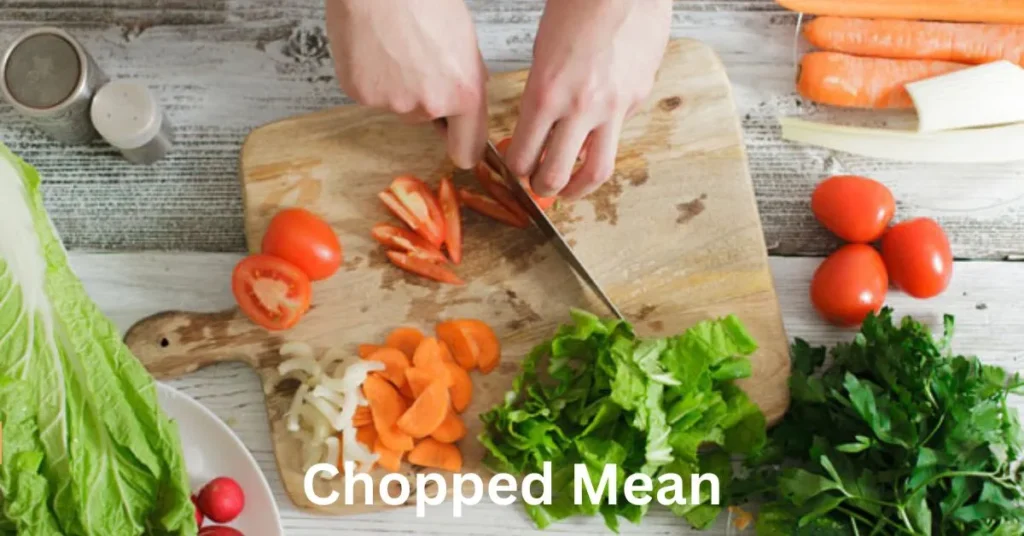
In cooking, chopped has a very specific and practical meaning. It refers to cutting food into smaller pieces, usually irregular in size, using a knife, chopper, or other kitchen tools. The purpose of chopping is to make ingredients easier to cook, mix, or eat, and to release flavors more effectively. For example, chopped onions, garlic, or herbs are often used as a base in recipes to enhance taste and aroma.
There are several types of chopping in culinary practice:
- Rough chop: Large, uneven pieces, often used when presentation is less important, such as in stews or soups.
- Fine chop: Small, more uniform pieces, commonly used for garnishes or recipes where texture matters.
- Coarse chop: Medium-sized pieces, larger than fine chop but smaller than rough chop, used in salads or stir-fries.
It’s important to note the difference between chopped and similar terms:
- Chopped vs diced: Diced pieces are uniform squares, while chopped pieces are more irregular.
- Chopped vs minced: Minced is much finer than chopped.
- Chopped vs sliced: Slices are thin, flat pieces, unlike the irregular chunks in chopped foods.
Using the right chopping style can significantly affect the texture and cooking time of a dish. For instance, finely chopped garlic cooks faster and infuses flavor more quickly than roughly chopped cloves.
In recipes, the instruction “add chopped onions” signals that precision isn’t crucial; the main goal is to break the ingredient into manageable pieces. This culinary meaning of chopped is widely recognized, making it the most literal and original use of the word.
What Does Chopped Mean in Slang?
Beyond its literal meaning in cooking, chopped has developed a variety of meanings in modern slang, especially in informal speech, social media, and pop culture. In slang, chopped is often used to describe someone or something as damaged, unattractive, or not in the best condition. For example, in certain regions, people might say, “That outfit is chopped,” implying it looks bad or poorly put together.
Slang usage of chopped can also be playful or teasing, depending on tone and context. Among friends, calling someone “chopped” may be lighthearted, similar to jokingly saying “you look rough” or “messy.” However, outside of casual conversation, it can be perceived as insulting or offensive, so understanding context is critical.
The rise of online platforms like TikTok, Instagram, and Twitter has helped popularize chopped as slang. Creators often use it in captions, memes, and reactions to describe something negatively like a bad photo, awkward situation, or unflattering appearance. It can also appear in rap lyrics or pop culture references, emphasizing style, image, or reputation.
Interestingly, slang meanings of chopped are highly regional. In the United States, it often relates to appearance or quality, whereas in the UK, it might carry slightly different connotations, sometimes focusing on someone’s face or overall look.
Despite its casual or humorous use, the slang version of chopped still derives from the original sense of “broken or cut down”, metaphorically applied to people, objects, or situations. Recognizing this connection helps readers understand how a simple cooking term evolved into versatile modern slang.
What Does Chopped Mean in British Slang?
In the United Kingdom, the word chopped has taken on a unique meaning in regional slang, differing slightly from American usage. In British English, chopped is often used to describe a person’s appearance, particularly when it is unattractive or disheveled. For example, someone might say, “He’s looking chopped today,” suggesting that the person’s face or overall look is rough or unkempt.
This slang usage is commonly found in urban areas and youth culture, particularly in informal speech, music, and social media. In some contexts, it can also imply that someone has been defeated, rejected, or humiliated, similar to saying they’ve been “put down” or “taken out” in a social situation.
Like most slang terms, the tone and context are crucial. Among friends, calling someone chopped may be playful or teasing, but in a more formal or unfamiliar setting, it can be perceived as rude or insulting. This makes it important to read the situation before using the term.
Chopped in British slang also appears in music and pop culture, particularly in rap, grime, and street culture. Artists may use it to describe people, events, or objects in a way that conveys harsh critique or disapproval.
Overall, while the literal meaning of chopped is universal cut into pieces the British slang adaptation shows how the word has evolved culturally. It demonstrates how a simple verb can transform into a social commentary tool, used to describe appearance, status, or condition in a figurative sense.
What Does Chopped Mean on Social Media?
On social media platforms like TikTok, Instagram, and Twitter (X), the word chopped has become a popular slang term, often used in a humorous, critical, or reactionary way. Unlike the literal meaning in cooking, here chopped is typically metaphorical, describing something as unattractive, low-quality, or poorly done. For example, a TikTok caption might say, “That outfit is chopped,” signaling that the person’s clothing looks messy or unappealing.
Social media has also given rise to creative variations and memes. Users might combine chopped with other terms or emojis to exaggerate reactions, such as pointing out awkward photos, bad edits, or funny fails. Because posts on these platforms are public, chopped has become a quick shorthand for critique among young audiences, conveying disapproval without lengthy explanation.
In addition, music and pop culture references influence online use. Rap lyrics or viral video clips often feature chopped to describe someone’s style, reputation, or appearance, and fans adopt the term when commenting or sharing content. This has helped the word spread globally, making it recognizable even outside its original regional slang origins.
It’s important to note that the tone and context are key on social media. While it can be playful or teasing among friends, using chopped inappropriately can be interpreted as insulting. Therefore, understanding audience and platform culture is essential.
Ultimately, social media has expanded the versatility of chopped, turning a simple cooking term into a widely understood slang expression that critiques appearance, quality, or style in both humorous and serious ways.
Is “Chopped” an Insult?
The word chopped can be either neutral, playful, or insulting depending on context, tone, and audience. While its literal meaning cut into pieces is harmless, the slang and figurative uses can carry negative connotations, especially when describing a person or their appearance. For example, saying, “You look chopped” could be intended as a joke among close friends, but in most situations, it is perceived as rude or insulting, implying someone looks unattractive or damaged.
It’s also worth noting that the word can describe situations or objects. For example, a failed project or messy room might be called “chopped,” which is not insulting to a person but conveys that something is in poor condition.
Because of these nuances, whether chopped is considered an insult depends heavily on context:
- Among friends: Often playful, teasing, or humorous.
- Public or unfamiliar settings: Likely perceived as negative or offensive.
- Describing objects or situations: Neutral and figurative, indicating disorder or poor quality.
Understanding these distinctions is essential before using the term. While slang evolves quickly, being mindful of audience and tone helps avoid unintentionally offending someone when using the word chopped.
Examples of “Chopped” in Sentences
To fully understand how chopped is used, it’s helpful to look at examples in different contexts cooking, slang, and everyday conversation.
1. Cooking Examples:
- “Add one chopped onion to the pan and sauté until golden.”
- “The recipe calls for chopped tomatoes instead of diced ones.”
- “Sprinkle chopped herbs over the pasta before serving.”
In these examples, chopped refers to ingredients cut into smaller pieces. The exact size doesn’t have to be precise; the main goal is to make the ingredient manageable for cooking or eating.
2. Slang Examples:
- “Your outfit is chopped you need a new look!”
- “He got chopped after that embarrassing moment on stage.”
- “That photo is totally chopped, can’t believe it got posted.”
Here, chopped is used figuratively to describe something unattractive, poorly done, or a person being embarrassed or defeated. Tone and context determine whether it’s playful or insulting.
3. Social Media / Online Examples:
- “This TikTok trend is chopped, nobody’s doing it right.”
- “The edits in this video are so chopped, it hurts to watch.”
- “Her makeup is cute, but the lighting makes it look chopped.”
On platforms like TikTok or Instagram, chopped is often used in quick commentary or reactions, summarizing critique in one word.
By looking at these examples, readers can see how chopped shifts meaning depending on context. From literal cutting in cooking to figurative insults in slang, the word is versatile but requires attention to tone and audience to be used appropriately.
Origin and History of the Word “Chopped”
The word chopped originates from the verb “chop,” which has been part of the English language since at least the 15th century. Originally, chop referred to cutting or striking something with a sharp tool, such as an axe or knife. Its primary use was literal, describing physical actions like chopping wood, meat, or vegetables. Over time, the past tense form, chopped, became widely used in recipes, instructions, and everyday descriptions involving cutting things into smaller pieces.
The figurative or slang usage of chopped developed much later, particularly in urban and youth culture. Linguists trace this shift to the 20th century, when English speakers began using the word metaphorically to describe something as broken, damaged, or unattractive. For example, in British slang, saying someone is “chopped” often refers to their appearance or overall presentation, while in American slang, it can describe both people and situations negatively.
The rise of pop culture, music, and social media in the 21st century accelerated the spread of slang meanings. Rap lyrics, memes, and online captions helped transform chopped from a literal action into a versatile slang term. Its metaphorical use still maintains a connection to the original idea of cutting, breaking, or reducing something whether it’s food, appearance, or quality.
Understanding the origin and evolution of chopped helps explain why it can have such different meanings today. From simple culinary instructions to slang insults or critiques, the word demonstrates how language adapts to cultural and social trends, maintaining its roots while gaining new interpretations.
Synonyms and Similar Words for “Chopped”
The word chopped has a variety of synonyms and related terms, depending on whether it is used in cooking, slang, or general English. Understanding these alternatives can help you choose the right word for context and avoid misunderstandings.
1. Synonyms in Cooking:
In culinary contexts, chopped is often interchangeable with terms describing how food is cut, though the exact size and style may vary:
- Diced: Cut into small, uniform squares.
- Mincing: Chopping into very fine pieces, smaller than chopped.
- Sliced: Cutting into flat, thin pieces rather than chunks.
- Crushed: Breaking into small pieces, often by pressing or pounding, not slicing.
Using the correct term ensures recipes are followed accurately and the texture of the dish turns out as intended.
2. Synonyms in Slang:
When chopped is used figuratively to describe people, appearance, or situations, several slang alternatives convey a similar meaning:
- Busted: Informally used to describe someone looking unattractive or flawed.
- Rough: Suggests a messy or unkempt appearance.
- Beat: Often used in urban slang to describe looking tired, worn, or unattractive.
- Wrecked: Describes a person or object in poor condition.
3. General or Figurative Alternatives:
Outside cooking and slang, chopped can also be replaced with words like:
- Broken: Emphasizing damage or destruction.
- Reduced: Something diminished in size, quality, or value.
- Fragmented: Something divided into pieces or parts.
Choosing the right synonym depends heavily on context, audience, and tone. Using a cooking synonym for slang or vice versa can create confusion. By understanding these alternatives, you can convey your meaning precisely whether writing recipes, casual posts, or formal content.
Common Misunderstandings About “Chopped”
Although chopped is a common word, it is often misunderstood because its meaning changes depending on context. One of the biggest misconceptions is confusing the literal culinary meaning with the slang or figurative meanings. In cooking, chopped simply refers to cutting ingredients into smaller pieces, with no judgment or emotional connotation. However, when used in slang, chopped can imply something negative about a person, object, or situation. Mixing these contexts can lead to awkward or unintended interpretations.
Another frequent misunderstanding involves size and precision in cooking. Many people assume chopped means the same as diced or minced. In reality, chopped pieces are usually irregular and roughly cut, while diced is uniform and minced is very fine. Misusing these terms can affect recipes, cooking times, and texture, which is particularly important for chefs and home cooks following instructions.
Slang usage also creates confusion. For example, someone unfamiliar with UK or urban slang might hear, “He’s chopped,” and incorrectly assume it refers to food or physical injury rather than appearance or style. Similarly, on social media, when a post is called “chopped,” newcomers might interpret it literally instead of understanding it as a critique or humorous remark.
Finally, tone matters. Chopped can be playful, teasing, or insulting. Misreading the tone can cause embarrassment or offense, especially online. Recognizing the context, regional differences, and audience is key to understanding and using the word correctly.
Frequently Asked Questions
Because chopped has multiple meanings, people often have questions about its usage, slang interpretations, and culinary applications. Here are some of the most common questions answered clearly:
1. Is chopped a bad word?
Not always. In cooking, it’s completely neutral and simply means cutting food into smaller pieces. In slang, it can be negative when describing someone’s appearance or a situation, but among friends it can be playful or teasing. Tone and context determine whether it’s offensive.
2. What does chopped mean in cooking?
In cooking, chopped means to cut ingredients into smaller, usually irregular pieces. It differs from dicing (uniform squares), mincing (very fine pieces), and slicing (thin flat pieces). Examples include chopped onions, tomatoes, or herbs.
3. What does chopped mean in slang?
In slang, chopped usually describes something or someone as unattractive, damaged, or poorly done. It can refer to appearance, objects, or situations. Social media and pop culture have popularized this usage, especially on TikTok, Instagram, and in rap lyrics.
4. What does chopped mean in British slang?
In the UK, chopped often refers to someone looking rough, messy, or unattractive. It can also imply humiliation or social defeat. Like other slang, it’s informal and depends heavily on context.
5. Can chopped be used positively?
Rarely. While mostly negative, it can be used humorously among friends or online in a teasing manner. Understanding audience and tone is crucial to avoid offense.
By addressing these FAQs, readers can quickly grasp the multiple meanings of chopped, use it correctly, and avoid common mistakes in both formal and informal settings.
Conclusion
The word chopped is a versatile term in the English language, with meanings that range from literal to figurative, depending on context.
At its core, it refers to cutting something into smaller pieces, a definition most commonly associated with cooking.
Chopped onions, herbs, and meat are all examples of this neutral, practical use. Understanding this literal meaning provides a solid foundation for grasping its other interpretations.
Beyond the kitchen, chopped has evolved into slang and cultural expressions.
In American and British informal speech, it can describe someone or something as unattractive, poorly executed, or in a messy state.
Social media and pop culture have further popularized these uses, making chopped a widely recognized term for critique, humor, or playful teasing.
Regional variations exist, with British slang often emphasizing appearance and American slang sometimes referencing situations or outcomes.
It’s important to recognize that tone and context are key.
Among friends, calling something or someone chopped may be playful or joking, while in more formal or public settings, it could be considered insulting.
Misunderstanding the context can lead to confusion or offense, so careful usage is recommended.
Ultimately, chopped demonstrates the evolution of language, showing how a simple culinary term can expand into slang, online culture, and everyday expressions.
By understanding its literal, slang, regional, and social media meanings, readers can confidently use the word, interpret it correctly, and appreciate the flexibility of modern English.

Jordon Fox is an emerging artist and creative from Philadelphia, Pennsylvania, known for blending music, fashion, and fitness into his personal brand and artistic identity. He’s built a reputation as a multi-talented creator with a strong focus on authenticity and inspiring others.