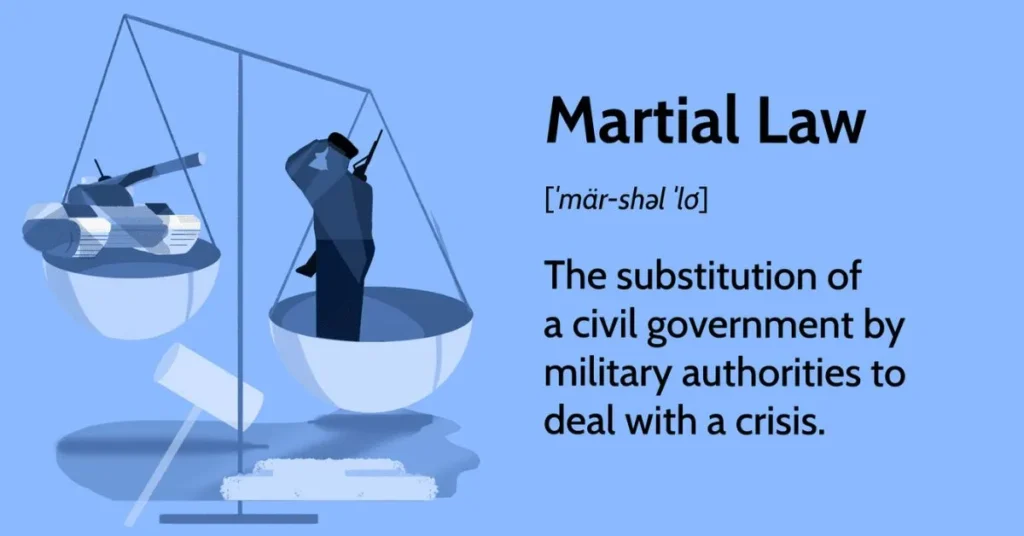
Martial law is a term that often sparks curiosity—and sometimes fear—but what does it really mean? In simple terms, martial law is a temporary system of rule in which the military takes control of civilian functions during extreme situations, such as war, rebellion, or widespread civil unrest.
Under martial law, normal civil laws may be suspended, giving the military authority to enforce order, impose curfews, and oversee law enforcement. Understanding martial law is crucial because it directly affects civil rights, freedoms, and daily life.
Many people hear the term in news reports or history lessons but may not grasp the full scope of its implications.
This article will break down the definition, purpose, powers, and limitations of martial law, explore historical examples, and clarify the difference between martial law and other emergency measures. By the end, you’ll have a clear understanding of what martial law means and how it works.
Definition of Martial Law
Martial law is a legal and political concept that comes into play during extraordinary situations when normal civil authority cannot maintain order. At its core, martial law is the temporary imposition of military control over civilian functions, allowing the armed forces to step in and maintain stability. This usually happens in times of war, rebellion, natural disasters, or widespread civil unrest.
Under martial law, certain civil liberties may be temporarily suspended. For example, governments may impose curfews, restrict freedom of movement, limit public gatherings, and even detain individuals without the usual judicial process. However, martial law is meant to be a short-term measure, implemented to restore normalcy and order rather than serve as a permanent form of government.
Understanding this definition helps citizens grasp the scope, purpose, and limitations of martial law, ensuring they are aware of how it can affect civil rights and everyday life.
Purpose of Martial Law
The primary purpose of martial law is to maintain order and protect national security during times of extreme crisis when civilian authorities are unable to function effectively. Governments may declare martial law in situations such as war, violent rebellions, civil unrest, or large-scale natural disasters, where the usual law enforcement and administrative systems cannot guarantee public safety. By temporarily placing the military in control, authorities aim to restore stability quickly and prevent further chaos.
Martial law also serves as a tool to protect lives, property, and critical infrastructure. In situations where riots, armed conflicts, or widespread disorder threaten communities, the military’s involvement can enforce curfews, regulate movement, and ensure that essential services continue to operate. It provides a structured and authoritative way to respond to emergencies that civilian agencies might not be equipped to handle.
Another key purpose of martial law is to signal the seriousness of a situation to the public. Its declaration often communicates that the government is taking extreme measures to prevent disorder from escalating.
Who Can Declare Martial Law
Martial law is not something that happens randomly; it is a formal declaration made by the highest authority in a country. In most nations, this power lies with the president, monarch, prime minister, or the governing council, depending on the constitutional and legal framework.
The process usually begins when civilian government institutions are unable to maintain law and order due to extreme crises, such as armed rebellion, large-scale riots, or invasion. Once declared, martial law temporarily transfers certain powers from civil authorities to the military. This does not mean the government loses all control; rather, the military operates under the supervision or direction of civilian leadership to ensure the restoration of stability.
In some countries, the declaration of martial law may require parliamentary approval or oversight by judicial authorities to prevent abuse of power.
Understanding who can declare martial law helps citizens recognize the legal legitimacy of such actions and distinguishes it from unlawful military takeovers or coups. It emphasizes that martial law is intended as a temporary, constitutionally authorized measure rather than permanent military rule.
Powers and Restrictions Under Martial Law
When martial law is declared, the military assumes temporary authority over civilian functions, but this power is limited to restoring order and ensuring public safety. One of the key powers under martial law is the ability to enforce curfews and restrict movement. Military authorities can control when and where people can travel, close roads, or limit access to certain areas to prevent unrest from spreading.
Another important power is the control over law enforcement. Under martial law, the military can replace or assist the police in maintaining order. This may include conducting searches, making arrests, and regulating gatherings. In extreme cases, authorities may also temporarily suspend certain civil laws to allow for faster decision-making during emergencies.
However, martial law also comes with legal restrictionsWhile it grants extraordinary powers, martial law does not allow the military to enact new laws or replace the government entirely. Its purpose is to stabilize the situation and return control to civilian authorities as soon as possible. By understanding these powers and restrictions, citizens can better comprehend what martial law entails and recognize the balance between security and civil liberties during times of crisis.
Impact on Civil Rights
One of the most significant aspects of martial law is its impact on civil rights. When the military takes control, certain freedoms that citizens normally enjoy may be temporarily restricted. These restrictions are intended to maintain order, but they can affect daily life in noticeable ways.
Under martial law, freedom of movement is often limited. Curfews may be imposed, checkpoints established, and access to specific areas restricted. Similarly, freedom of assembly—the right to gather in groups for protests, celebrations, or meetings—can be suspended to prevent disorder or violence. Freedom of speech and the press may also face limitations, particularly if communication is seen as inciting unrest or spreading false information.
In addition, martial law can affect legal rights. Despite these restrictions, martial law is designed to be temporary and proportional to the crisis at hand. It is not a permanent suspension of rights but a measured response to extraordinary situations.
Historical Examples of Martial Law
Martial law has been declared in various countries throughout history, often during times of war, civil unrest, or national emergencies. Studying these examples helps illustrate how martial law works in practice and its impact on society.
One notable case is the Philippines under Ferdinand Marcos. In 1972, Marcos declared martial law citing threats of rebellion and civil disorder. During this period, the military gained broad authority to enforce curfews, suppress protests, and detain political opponents. While the official goal was to maintain order, critics argue that civil liberties were significantly restricted, and the declaration became a tool for extending political power.
In the United States, martial law has been declared a few times in history, usually during crises. For instance, during the Civil War, President Abraham Lincoln authorized military control in certain states to maintain order and suppress rebellion.
These cases show that while martial law can stabilize a country during emergencies, it also raises concerns about civil rights and government overreach.
By examining historical examples, citizens can better understand the balance between maintaining order and protecting freedoms, as well as the consequences of extended military authority over civilian life.
Difference Between Martial Law and State of Emergency
Although the terms martial law and state of emergency are sometimes used interchangeably, they are legally and practically different. Understanding the distinction is important because each has different implications for civil liberties and government authority.
A state of emergency is typically declared by a civilian government during crises such as natural disasters, pandemics, or localized unrest. It allows authorities to temporarily enhance powers of enforcement, restrict certain activities, and mobilize resources to maintain public safety. However, civilian institutions remain in control, and normal laws largely remain in effect. Citizens’ fundamental rights are generally respected, though some may be temporarily limited depending on the situation.
In contrast, martial law involves military control over civilian functions.
The main difference lies in who holds authority and the level of restrictions imposed. While a state of emergency expands government powers within the normal legal framework, martial law transfers authority to the military, sometimes suspending civil laws entirely. Knowing this distinction helps citizens recognize the severity of the situation and their rights under each scenario.
Is Martial Law Legal?
Martial law is a legal tool in many countries, but its application is usually strictly regulated by the constitution or national laws. Its legality depends on whether the declaration follows the proper legal procedures, is limited to specific circumstances, and respects constitutional boundaries. Typically, martial law is authorized only during extreme emergencies when civilian authorities cannot maintain order, such as war, rebellion, or widespread unrest.
In most nations, the constitution specifies who can declare martial law, under what circumstances, and how long it can remain in effect. For example, the president or prime minister may have the authority to impose martial law, but the legislature or courts may have oversight to prevent abuse. These legal frameworks are designed to balance the need for security with protection of civil liberties.
However, legality does not guarantee that martial law is free from controversy.Understanding the legal framework helps citizens recognize when martial law is legitimate and ensures accountability during its implementation.
Common Misconceptions About Martial Law
Martial law is often misunderstood, leading to widespread misconceptions about its purpose, scope, and effects. One of the most common myths is that martial law automatically means violence or oppression. While martial law grants the military greater authority, its primary goal is to restore order and protect citizens, not to harm them. The presence of military control does not always result in abuse or chaos.
Another misconception is that martial law allows the military to permanently replace civilian government. In reality, martial law is a temporary measure, intended to stabilize a crisis until normal governance can resume. Civilian authorities usually retain oversight, and the military operates under legal and constitutional frameworks.
Its purpose is to balance security with proportional restrictions, not to erase citizens’ liberties indefinitely.Understanding this distinction is crucial to avoid panic or misinformation during crises.
By addressing these misconceptions, citizens can gain a clearer, more accurate understanding of martial law, recognize its temporary and legal nature, and differentiate between genuine emergency measures and abuse of power.
FAQs About Martial Law
1. What does martial law mean?
Martial law is the temporary imposition of military control over civilian functions during emergencies, such as war, rebellion, or civil unrest. It allows the military to maintain order and enforce laws when civilian authorities are unable to do so.
2. Who can declare martial law?
Typically, the president, prime minister, or highest national authority can declare martial law, based on constitutional provisions. In some countries, legislative or judicial oversight may be required.
3. What powers does the military have under martial law?
The military can enforce curfews, restrict movement, regulate assemblies, and oversee law enforcement. Certain civil rights may be temporarily limited, but the military cannot permanently replace civilian government.
4. How long does martial law last?
Martial law is intended to be temporary, usually lasting only until the crisis is resolved and civilian authorities can safely regain control. The exact duration depends on the country and the nature of the emergency.
5. How is martial law different from a state of emergency?
A state of emergency keeps civilian authorities in control and temporarily expands their powers, whereas martial law involves military control over civilian functions and may suspend civil laws. Martial law is generally stricter.
6. Are civil rights completely suspended during martial law?
No. Certain rights, such as freedom of movement, assembly, or speech, may be limited temporarily, but fundamental rights are not permanently eliminated. Martial law is meant to restore order, not suppress freedoms permanently.
7. Is martial law legal?
Yes, when declared according to constitutional and legal frameworks, martial law is legal. Its legality ensures that the military operates under oversight and limits, preventing abuse of power.
Conclusion
While it grants extraordinary authority, martial law is meant to be temporary and is regulated by constitutional or legal frameworks to prevent abuse.
Understanding martial law is crucial for citizens because it directly affects civil rights, daily life, and freedoms.
However, these restrictions are intended to restore stability, not to permanently suppress liberties. Historical examples from countries like the Philippines, the United States, Thailand, and Poland demonstrate that martial law can be both a necessary emergency measure and a potential source of controversy if misused.
It is also important to distinguish martial law from related concepts such as a state of emergency or military coup, as each carries different legal authority and implications for citizens.
Misconceptions often exaggerate its impact, creating unnecessary fear or confusion.
By understanding what martial law means, its purpose, powers, limitations, and legal framework, individuals can better navigate situations where it is declared, remain informed about their rights, and recognize the temporary and controlled nature of such measures.
Knowledge empowers citizens to stay safe, compliant, and aware during times of crisis.

Swaan was born in Cambridge, the eldest of three children of pathologist Meredith Blake Robson Swaan and his wife, Marjorie Dykes.
Swaan was educated at King’s College School, Cambridge, and then at Winchester College, a boarding independent school for boys in the city of Winchester in Hampshire, where he was an exhibitioner. He then studied zoology at Gonville and Caius College, Cambridge, where he graduated MA and PhD.