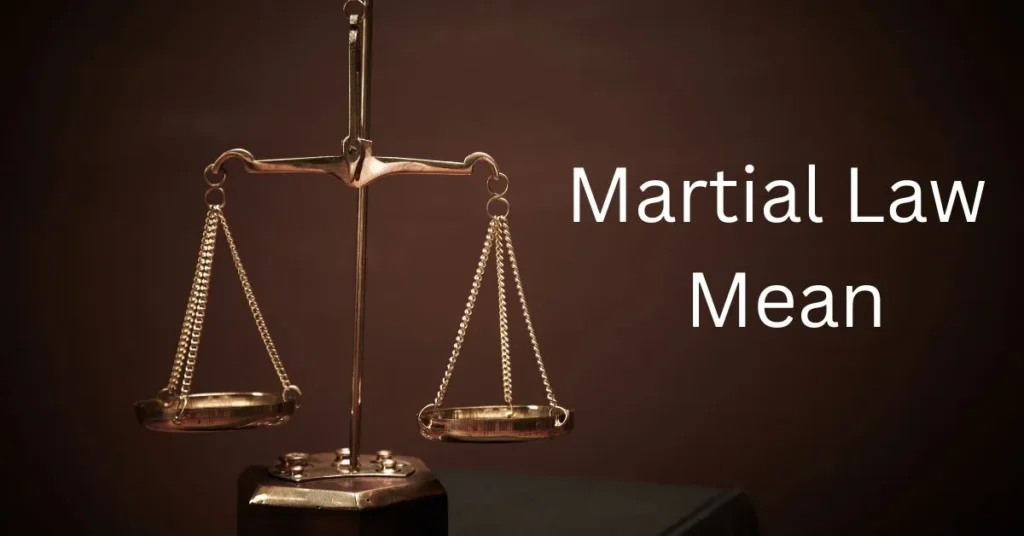
Martial law is a term that often sparks concern and curiosity, yet many people are unclear about what it truly entails.
Simply put, martial law refers to the temporary imposition of direct military control over normal civilian functions, usually during times of extreme emergency, war, or civil unrest.
Under martial law, the government may suspend certain civil liberties, impose curfews, restrict movement, and enforce laws through military authority instead of ordinary courts.
While the idea might sound alarming, martial law is typically meant to restore order and ensure security when ordinary law enforcement is unable to handle a crisis.
Its application and limits vary widely across countries, and it has historically been both a tool for protecting citizens and, at times, a source of controversy.
This article will explore what martial law means, its legal basis, its effects on civilians, and real-world examples to provide a clear and balanced understanding.
Definition of Martial Law
Martial law is a legal and military concept that occurs when the normal civil authority is temporarily replaced or supplemented by military control. In simple terms, it means that the military takes over the administration of justice and public order in a country, region, or city, usually during times of extreme crisis. This could include war, widespread civil unrest, natural disasters, or situations where the government believes civilian authorities cannot maintain law and order effectively.
Legally, martial law often involves the suspension or limitation of certain civil liberties, such as freedom of movement, freedom of assembly, and, in some cases, freedom of the press. Governments may impose curfews, restrict public gatherings, or detain individuals without the usual judicial process. However, the exact powers and scope of martial law depend on the country’s constitution, laws, and historical precedent.
It is important to note that martial law is different from military rule. In military rule, the military governs the country indefinitely, often after a coup, whereas martial law is intended to be temporary, with the military acting in support of civil authorities. Similarly, martial law differs from a state of emergency, which may grant extra powers to authorities without direct military control.
Understanding martial law’s definition is crucial because it directly impacts citizens’ rights, the functioning of government, and the rule of law during critical periods. This clarity helps people distinguish between myths and the legal reality of martial law.
Legal Basis and Authority
Martial law is not arbitrary; it usually has a legal foundation established in a country’s constitution or statutory laws. The authority to declare martial law is typically vested in the highest levels of government, such as the president, prime minister, or other executive officials. In some countries, the military itself may play a role in recommending its imposition during crises, but the formal declaration is almost always a civilian authority’s responsibility.
The legal framework for martial law varies widely depending on the country. For example, in the United States, martial law can only be declared under extraordinary circumstances and must respect constitutional limits, though the scope can be broad in cases of rebellion or invasion. In other countries, such as the Philippines or Pakistan, constitutions explicitly outline who can declare martial law, under what conditions, and for how long. These laws often include specific checks and balances, such as requiring legislative approval or judicial review.
Importantly, martial law does not mean unlimited power. Most legal systems impose restrictions to prevent abuse, such as limits on how long it can last and rules for how military authorities operate alongside civilian agencies. Understanding the legal basis helps clarify that martial law is a structured, temporary measure intended to maintain public order rather than a free-for-all takeover by the military.
By examining these legal provisions, citizens can better understand their rights and the responsibilities of the government during periods of martial law, distinguishing lawful actions from potential overreach.
Situations When Martial Law is Declared
Martial law is typically declared during times of extreme crisis when ordinary civil authorities are unable to maintain law and order. One common situation is widespread civil unrest, such as violent protests, riots, or insurrections that overwhelm the police or local government. In these cases, military intervention under martial law can help restore order and protect citizens from chaos.
Another situation is war or external threats, where a country faces invasion, terrorist attacks, or significant threats to national security. Martial law allows the government to mobilize military resources quickly, control movement, and implement emergency measures to safeguard critical infrastructure and civilian populations.
Natural disasters and emergencies can also prompt martial law in some countries. For instance, after catastrophic earthquakes, floods, or hurricanes, authorities may temporarily grant the military authority to enforce curfews, distribute aid, and maintain security when civil agencies are overwhelmed.
Historically, martial law has been declared in various countries under these circumstances. For example, during Ferdinand Marcos’ regime in the Philippines, it was implemented to suppress political opposition and civil unrest. In Pakistan, martial law has been declared several times in response to political instability and perceived threats to national security.
While the situations that trigger martial law vary, a common thread is that it is meant as a temporary measure to stabilize the nation during extraordinary conditions. Understanding these scenarios helps citizens recognize when martial law may be justified and what it implies for governance, public safety, and civil liberties.
Powers and Responsibilities Under Martial Law
When martial law is declared, the government temporarily transfers certain powers from civilian authorities to the military to maintain order and public safety. The military gains authority over law enforcement, which may include patrolling streets, setting up checkpoints, and ensuring compliance with curfews or movement restrictions. Civilian police often operate under military supervision during this period.
One of the key powers under martial law is the ability to suspend certain civil rights. This can include restrictions on freedom of assembly, freedom of speech, and, in some cases, freedom of the press. Military authorities may also have the power to detain individuals suspected of threatening public order without the standard judicial procedures, though most legal frameworks set limits to prevent abuse.
Martial law often introduces military tribunals or courts to handle offenses that would normally be tried in civilian courts. These tribunals operate under different rules of procedure, which can expedite justice during emergencies but may also raise concerns about due process.
The responsibilities of the military under martial law extend beyond enforcing laws. They may oversee emergency services, coordinate disaster response, and protect critical infrastructure such as power plants, hospitals, or transportation networks. While the primary goal is maintaining stability, military authorities are expected to act in accordance with the law and respect the temporary nature of their powers.
Understanding the scope of powers and responsibilities under martial law is essential for citizens, as it clarifies what the military can and cannot do, helping prevent misinformation, fear, or misunderstanding during these extraordinary periods.
Impact on Citizens
Martial law significantly affects the daily lives of citizens because it temporarily shifts authority from civilian government to the military. One of the most immediate changes is the restriction of movement. Curfews may be enforced, roads may be blocked by checkpoints, and public gatherings can be limited or banned. These measures are intended to maintain public order but can disrupt routines, commuting, and social activities.
Civil liberties are also affected. Rights such as freedom of speech, assembly, and press may be curtailed. Media outlets could face censorship or restrictions on reporting sensitive information, while public protests may be prohibited. In some cases, individuals may be detained for violating martial law rules or for suspected involvement in unrest, often without the normal judicial protections.
Martial law can also impact economic activity and services. Businesses may face limited operating hours, schools may close, and government services could operate under military supervision. Essential services like healthcare, utilities, and transportation are generally maintained, but disruptions are common, particularly in conflict zones or areas experiencing unrest.
Despite these challenges, the primary goal of martial law is to ensure security and public safety. Citizens may experience temporary inconvenience, but the measures aim to prevent larger-scale chaos, looting, or violence. Understanding how martial law affects everyday life helps people comply with regulations while remaining aware of their rights, ensuring personal safety and community stability during extraordinary circumstances.
Martial Law vs State of Emergency
Martial law and a state of emergency are often confused, but they are distinct legal and administrative measures. Both are tools used by governments to address crises, yet they differ in authority, scope, and impact on citizens’ rights.
Martial law involves the temporary transfer of civil authority to the military. Under martial law, the military enforces laws, maintains public order, and can operate courts or tribunals in place of civilian judicial systems. Civil liberties such as freedom of movement, assembly, and speech may be suspended, and curfews or checkpoints are commonly enforced. Martial law is usually declared during extreme situations like war, widespread riots, or when civil authorities cannot manage a crisis effectively.
In contrast, a state of emergency allows civilian governments to assume additional powers without necessarily placing the military in control. Governments may impose temporary restrictions on gatherings, control resources, or mobilize agencies to respond to disasters or public health crises. Unlike martial law, the judiciary generally continues to function normally, and civil rights are often only partially limited.
The key difference lies in who is in charge and the extent of restrictions. Martial law places the military at the center of authority, whereas a state of emergency remains under civilian control with expanded powers.
Understanding this distinction helps citizens recognize the severity and implications of government actions during crises, ensuring they can comply with laws while safeguarding their rights. It also clarifies misconceptions about military takeovers versus emergency measures designed to protect public safety.
Historical Examples of Martial Law
Throughout history, martial law has been declared in various countries to address crises, maintain order, or consolidate power. These examples help illustrate how martial law operates and its impact on society.
One of the most notable cases is the Philippines under Ferdinand Marcos. In 1972, Marcos declared martial law, citing threats of communist insurgency and political instability. The military took control of key government functions, civil liberties were severely restricted, and opposition figures were arrested. While the stated goal was to restore order, the period also saw widespread human rights abuses and suppression of dissent.
In Pakistan, martial law has been imposed multiple times, often following political instability or coups. For example, General Zia-ul-Haq declared martial law in 1977, suspending the constitution and taking control of the government. The military administration oversaw law enforcement, and civil liberties were curtailed.
Even in countries like the United States, martial law has been used, though less frequently. During the Civil War, President Abraham Lincoln imposed martial law in certain regions to maintain order and protect national security. Similarly, temporary martial law was declared in Hawaii after the attack on Pearl Harbor to control civilian and military activities.
Other international examples include martial law in Thailand and Egypt, where military authorities stepped in during political unrest to stabilize the nation.
These historical cases show that martial law can be used as a tool for both security and control. While it can restore order in emergencies, it also carries significant risks for civil liberties, making oversight and legal safeguards essential to prevent abuse.
Pros of Martial Law
Martial law, despite its restrictions, can serve as an effective tool for governments to restore stability and protect citizens during extreme crises. One of its primary advantages is the ability to maintain public order quickly. In situations such as riots, violent protests, or civil unrest, civilian authorities may be overwhelmed. Military intervention can provide a rapid, organized response to prevent further chaos and protect lives and property.
Another benefit is enhanced national security. During times of war, terrorism, or invasion threats, martial law allows the government to mobilize military resources efficiently, secure critical infrastructure, and control strategic areas. This centralized authority ensures that emergency decisions are implemented swiftly, minimizing delays that could worsen the crisis.
Martial law also facilitates coordinated disaster response. In cases of natural disasters like floods, earthquakes, or hurricanes, military forces can manage logistics, distribute aid, and maintain safety in areas where civilian services are disrupted. This organized approach can save lives and reduce panic among affected populations.
Additionally, martial law can act as a deterrent against further unrest or illegal activity. The visible presence of the military, curfews, and checkpoints discourage potential lawbreakers and help restore confidence among citizens that the government is in control.
While the measures under martial law may be restrictive, they are often temporary and aimed at achieving stability. When applied responsibly, martial law can be a necessary tool to protect society, safeguard infrastructure, and ensure the safety of citizens during extraordinary circumstances.
Cons and Controversies of Martial Law
While martial law can restore order during crises, it also comes with significant drawbacks and potential for abuse. One major concern is the suspension of civil liberties. Citizens may face restrictions on freedom of speech, assembly, and movement. In some cases, the press may be censored, and individuals can be detained without standard judicial procedures. These measures, while intended to maintain security, can infringe on basic human rights.
Another controversy is the risk of abuse of power. Because martial law grants extraordinary authority to military officials, there is a danger that it can be used to suppress political opposition or consolidate control rather than address genuine emergencies. Historical examples, such as Ferdinand Marcos’ martial law in the Philippines or repeated military interventions in Pakistan, show how power can be misused, leading to prolonged authoritarian rule and public fear.
Economic disruption is another downside. Curfews, business restrictions, and halted public services can negatively affect livelihoods and essential services. Citizens may experience uncertainty and stress, especially when the duration of martial law is unclear.
Finally, martial law can undermine public trust in government. If perceived as unnecessary or heavy-handed, it can foster resentment and resistance, which may prolong instability rather than resolve it.
Understanding these cons is crucial for citizens to evaluate the legitimacy of martial law and hold authorities accountable. While martial law may provide short-term solutions, its potential impact on rights, governance, and society underscores the importance of legal safeguards and strict limits on its use.
Common Questions and Misconceptions About Martial Law
Martial law often raises questions and confusion among citizens due to its uncommon and extraordinary nature. One frequent question is, “Is martial law legal?” The answer depends on a country’s constitution and laws. In most nations, martial law is legally authorized under specific conditions, such as war, rebellion, or extreme civil unrest, but it must follow defined procedures and limitations.
Another common question is, “Can elections happen under martial law?” While civil liberties may be limited, elections can sometimes still take place if the government decides to maintain political processes. However, military control can affect campaigning, voter turnout, or the fairness of the process.
People also ask, “How long can martial law last?” The duration is typically defined by law or constitution and varies by country. Some declarations are for a few days, while others historically have lasted years, especially when used as a political tool.
A major misconception is that martial law equals permanent military rule. In reality, martial law is intended to be temporary, with the military acting as a support to civilian authority. Another myth is that all civil rights are completely abolished; usually, only certain rights are suspended or limited to ensure public safety.
Understanding these common questions helps citizens separate myths from reality, know their rights, and respond appropriately during a martial law period. Awareness also ensures that military or government actions are held accountable and that citizens remain informed about what is legally permissible under extraordinary circumstances.
Conclusion
Martial law is a complex and often misunderstood concept that plays a critical role in maintaining order during times of extreme crisis.
At its core, martial law involves the temporary transfer of certain civil powers to the military, allowing authorities to enforce laws, maintain security, and respond to emergencies when civilian institutions are overwhelmed.
While it is intended as a short-term solution, its impact on citizens can be significant, affecting civil liberties, daily routines, and public trust in government.
Historically, martial law has been implemented in countries worldwide under various circumstances, from political unrest in the Philippines and Pakistan to emergency measures in the United States during wartime.
These examples demonstrate that while martial law can be an effective tool to restore stability, it can also lead to controversies, abuse of power, and restrictions on human rights if misapplied.
Understanding martial law is essential for every citizen. Knowing the legal basis, conditions for its declaration, and its effects on rights and freedoms helps people stay informed and respond appropriately during such periods.
Distinguishing martial law from a state of emergency or permanent military rule is also crucial to prevent misconceptions and fear.
Ultimately, martial law is a tool designed for extraordinary situations. When applied responsibly, it can protect society, safeguard public safety, and maintain order.
However, constant oversight, legal safeguards, and clear communication from authorities are necessary to ensure that this powerful measure serves the public good without undermining fundamental rights.

Swaan was born in Cambridge, the eldest of three children of pathologist Meredith Blake Robson Swaan and his wife, Marjorie Dykes.
Swaan was educated at King’s College School, Cambridge, and then at Winchester College, a boarding independent school for boys in the city of Winchester in Hampshire, where he was an exhibitioner. He then studied zoology at Gonville and Caius College, Cambridge, where he graduated MA and PhD.