Language is more than just words it is a way to express ideas, emotions, and experiences. One of the most powerful tools used in language is the metaphor.
But what does metaphor mean, and why is it used so often in writing and everyday speech? A metaphor is a figure of speech that compares two unlike things to create a deeper understanding or vivid image in the reader’s mind.
Instead of explaining something directly, a metaphor helps people feel the meaning through comparison.
Metaphors are everywhere. We use them in daily conversations, literature, poetry, education, and even social media, often without realizing it.
Phrases like “time is money” or “life is a journey” are common metaphors that simplify complex ideas. Understanding metaphors can improve reading comprehension, writing skills, and communication.
In this article, you will learn the clear definition of a metaphor, how it works, different types of metaphors, and real-life examples to help you understand this important figure of speech easily.
What Does Metaphor Mean?
A metaphor is a figure of speech in which one thing is described in terms of another, creating an implicit comparison without using “like” or “as.” Unlike similes, which make explicit comparisons (“as brave as a lion”), metaphors directly state that one thing is another, often making language more vivid, imaginative, and impactful. For example, saying “time is a thief” doesn’t mean that time literally steals, but it suggests that time can take away life’s moments, just as a thief takes possessions.
The word “metaphor” comes from the Greek word metaphora, meaning “to transfer” or “to carry over.” Essentially, a metaphor transfers qualities from one object or concept to another, giving readers or listeners a new perspective. Metaphors are widely used in everyday communication, literature, poetry, speeches, and even advertising because they help people understand abstract or complex ideas in a relatable way.
In literature, metaphors enrich the text by adding layers of meaning. Poets, novelists, and writers often rely on metaphors to evoke emotion, create imagery, and deepen understanding. Beyond writing, metaphors shape the way we think, helping us conceptualize experiences, emotions, and ideas. Cognitive linguists even suggest that metaphors are central to human thought, not just language—they help us process abstract concepts by relating them to familiar experiences.
Understanding metaphors is essential not only for writers and students but also for anyone who wants to communicate ideas clearly and effectively. By recognizing and using metaphors, we can make language more expressive, persuasive, and memorable.
How Metaphors Work in Language
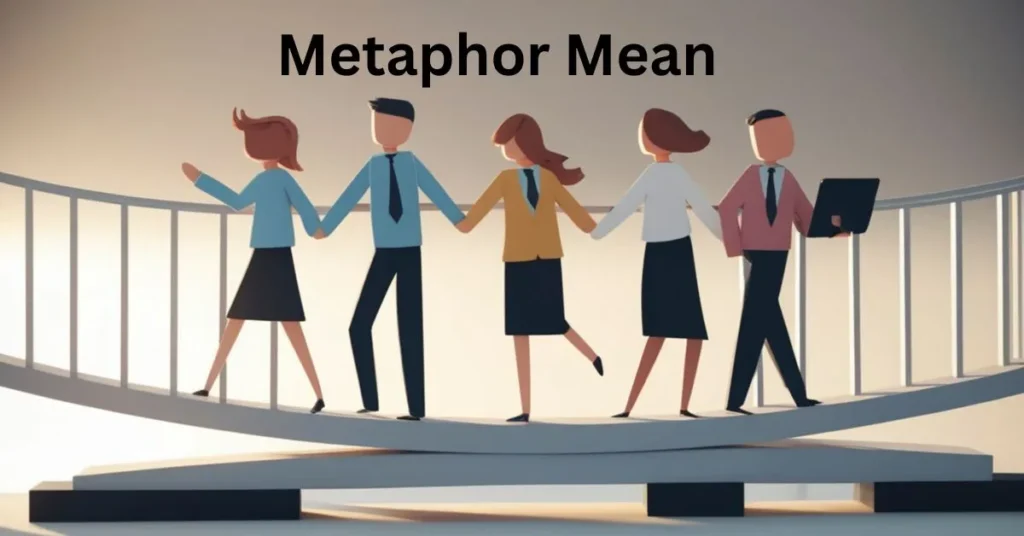
Metaphors work by creating a bridge between two seemingly unrelated concepts, allowing one idea to illuminate or explain another. Instead of describing something directly, a metaphor transfers qualities from one object or concept to another, making language more vivid and engaging. For example, the metaphor “a rollercoaster of emotions” doesn’t mean someone is literally riding a rollercoaster; it suggests that their feelings rise and fall rapidly, just like the twists and turns of a ride. This kind of figurative language helps people understand abstract ideas or complex emotions in a tangible way.
At the core, a metaphor relies on implied comparison. The thing being described (the tenor) takes on characteristics of the object it is compared to (the vehicle). For instance, in the metaphor “time is a river,” time is the tenor, and river is the vehicle, implying that time flows continuously, sometimes gently, sometimes rapidly. This indirect comparison is what makes metaphors powerful—they allow the reader or listener to imagine and interpret meaning rather than presenting it plainly.
Metaphors also play a crucial role in communication by making ideas more memorable. Humans tend to remember vivid images and emotional associations better than abstract statements, which is why metaphors appear in speeches, advertising, and teaching. They can persuade, inspire, and evoke emotion in ways literal language often cannot. Even in everyday conversations, people use metaphors unconsciously, saying things like “breaking the ice” or “grasping the concept,” which enriches our communication.
In short, metaphors work by connecting the familiar with the unfamiliar, creating understanding through imagery and comparison, and making language both expressive and effective.
Types of Metaphors
Metaphors come in many forms, each serving a unique purpose in language and writing. Understanding the different types can help you identify and use them effectively.
1. Simple Metaphor: This is the most straightforward type, where one thing is directly compared to another. For example, “Time is a thief” compares time to a thief, implying it takes away life’s moments.
2. Extended Metaphor: An extended metaphor develops the comparison over several lines or sentences, often throughout a paragraph or an entire work. For instance, in Shakespeare’s As You Like It, life is described as a stage, and people are actors with entrances and exits—this idea is carried throughout the play.
3. Implied Metaphor: Unlike a direct metaphor, an implied metaphor suggests the comparison without explicitly stating it. For example, “He barked commands at his team” implies the person is like a dog without directly saying so.
4. Mixed Metaphor: This occurs when two or more metaphors are combined, sometimes creating a humorous or confusing image. For example, “We’ll burn that bridge when we come to it” mixes “burning bridges” and “crossing a bridge when we come to it.”
5. Dead Metaphor: Dead metaphors are so commonly used that they have lost their figurative impact and are understood literally. Examples include “foot of the bed” or “branch of government.”
6. Visual Metaphor: Often used in advertising and media, visual metaphors rely on images to create a comparison, like showing a cracked smartphone screen labeled “Time waits for no one.”
Recognizing these types allows readers and writers to appreciate the depth of metaphors. Each type has its own effect: simple metaphors are clear and direct, extended metaphors are elaborate and immersive, while dead metaphors show how language evolves over time.
Metaphor vs Simile
Metaphors and similes are both figures of speech used to compare one thing to another, but they do so in different ways. Understanding the difference is essential for using them effectively in writing and speech.
A metaphor makes an implicit comparison by stating that one thing is another. For example, saying “Time is a river” does not mean that time literally flows like water, but it conveys the idea that time moves continuously and inevitably, just like a river. Metaphors are often more powerful and imaginative because they assert the comparison directly, allowing readers or listeners to form a vivid mental image.
A simile, on the other hand, makes a comparison explicit using words such as “like” or “as.” For instance, “Her smile was like the sun” compares a smile to the sun using “like,” making the comparison clear and straightforward. Similes are often easier for readers to understand, especially when explaining new or abstract concepts.
While both metaphors and similes enhance language by adding creativity and depth, metaphors tend to be more persuasive and emotive because they present the comparison as a direct statement rather than a suggestion. Similes, meanwhile, are ideal for clarity and simplicity.
Writers sometimes use both together, creating layered imagery for stronger impact. For example, “Life is a journey, as unpredictable as the sea” combines metaphor and simile to convey complexity and emotion.
By distinguishing between metaphor and simile, readers can better interpret figurative language, and writers can choose the most effective tool for expression. Both enrich communication, making language more vivid, memorable, and expressive.
Metaphor vs Other Figures of Speech
While metaphors are one of the most common figures of speech, they are often confused with other literary devices such as analogies, personification, symbolism, and idioms. Understanding the differences helps readers interpret language more accurately and allows writers to use each device effectively.
A metaphor compares two unlike things directly, suggesting one is the other. For example, “Time is a thief” conveys that time can take away life’s moments. In contrast, an analogy is a more extended comparison that explains one idea by showing its similarity to another. For instance, “Managing a team is like conducting an orchestra” explains leadership by comparing it to something familiar.
Personification gives human qualities to non-human things. For example, “The wind whispered through the trees” attributes a human action—whispering—to the wind. Metaphors may overlap with personification but are not limited to human traits—they can compare any two unrelated ideas.
Symbolism uses objects, characters, or actions to represent larger ideas. For instance, a dove often symbolizes peace. A metaphor can function symbolically, but symbolism usually carries broader cultural or thematic significance rather than a direct comparison.
Idioms are expressions with figurative meanings understood culturally, such as “kick the bucket” or “spill the beans.” While idioms often contain metaphorical language, their meaning cannot be inferred literally, unlike standard metaphors.
By distinguishing metaphors from these related figures of speech, writers can choose the best tool for expressing ideas, and readers can interpret meaning more accurately. Metaphors create vivid, imaginative connections, while other devices provide nuance, clarity, or cultural resonance in communication.
Examples of Metaphors in Everyday Language
Metaphors are not limited to literature or poetry—they appear in everyday conversations, making language more expressive and relatable. People often use metaphors unconsciously to describe feelings, actions, or situations. For example, saying “I’m drowning in work” doesn’t mean someone is literally underwater, but it conveys the overwhelming nature of tasks. Similarly, “He’s a rock” suggests stability and reliability, using a metaphor to describe personality traits.
In business and professional settings, metaphors are common tools to simplify complex ideas. For instance, phrases like “breaking the glass ceiling” or “launching a new initiative” use metaphorical language to communicate abstract concepts like career barriers or project initiation. Even in education, teachers employ metaphors to explain difficult concepts, such as saying “electrons orbit the nucleus like planets around the sun” to help students visualize atomic structure.
Social media and pop culture also rely heavily on metaphors. Expressions like “life is a journey” or “burning bridges” are widely used in posts, captions, and memes, demonstrating how metaphors shape thought and communication.
Recognizing these everyday metaphors enhances both comprehension and expression. It allows individuals to communicate abstract ideas clearly, connect emotionally, and make language more engaging. Metaphors not only describe reality but also shape how we perceive it, linking emotions, ideas, and imagery in memorable ways.
By observing and understanding these common metaphors, readers and writers can enrich their communication skills and appreciate the depth and creativity inherent in everyday language.
Metaphors in Literature and Poetry
Metaphors have been a cornerstone of literature and poetry for centuries, allowing writers to convey complex emotions, abstract ideas, and vivid imagery in a compact and powerful way. By comparing one thing to another, metaphors add depth, symbolism, and emotional resonance that literal language often cannot achieve.
In poetry, metaphors are particularly effective for evoking feelings and creating mental images. For example, in Robert Frost’s “The Road Not Taken,” the diverging roads serve as a metaphor for life choices, illustrating the impact of decisions without explicitly stating it. Similarly, William Shakespeare frequently used metaphors in his plays, such as comparing the world to a stage and people to actors, suggesting that life is performative and transient.
Metaphors are also central in novels and storytelling. Writers use them to enhance character development, describe settings, or communicate themes. In George Orwell’s Animal Farm, the farm itself is a metaphor for political systems and societal hierarchies, allowing readers to understand complex political ideas through narrative.
Beyond literature, metaphors in poetry and prose help readers experience the author’s perspective and engage their imagination. They create layers of meaning, allowing for interpretation on both literal and symbolic levels. For instance, describing love as a “flame” communicates warmth, danger, and intensity simultaneously.
Ultimately, metaphors enrich literary works by transforming ordinary language into expressive art. They encourage readers to think critically, feel deeply, and connect abstract concepts to tangible experiences, which is why they remain an indispensable element of creative writing and poetry.
Purpose and Importance of Metaphors
Metaphors are more than decorative language—they serve a vital purpose in communication, education, and creative expression. At their core, metaphors help people understand abstract or complex concepts by relating them to familiar experiences. For instance, saying “knowledge is a key” conveys the idea that learning can unlock opportunities, making the concept easier to grasp than a literal explanation.
In writing and literature, metaphors add emotional depth and imagery. They allow authors to express feelings, moods, and ideas in a way that resonates with readers on multiple levels. Metaphors can evoke empathy, create tension, or inspire imagination, making stories and poetry more engaging and memorable. For example, describing grief as “a storm within” communicates the intensity of emotion more vividly than a straightforward description.
Metaphors are also essential in everyday communication. People naturally use them to describe feelings, situations, and abstract ideas, from saying “time flies” to “the heart of the matter.” These comparisons simplify language while creating strong mental images, making conversations more relatable and impactful.
In education and teaching, metaphors help explain difficult subjects. Teachers might compare an atom to a solar system or the internet to a web, providing learners with concrete mental models to understand abstract concepts.
Overall, metaphors enhance comprehension, creativity, and expression. They allow us to communicate ideas efficiently, evoke emotion, and stimulate imagination. Understanding and using metaphors effectively not only improves writing and speaking skills but also deepens the way we think about and interpret the world.
How to Identify a Metaphor in a Sentence
Identifying metaphors in sentences can be challenging, especially because they often appear subtly in everyday language. A metaphor compares two unlike things, implying that one is the other, rather than stating it literally. Recognizing this comparison is the first step in identifying a metaphor.
One effective method is to look for figurative language cues. Ask yourself: does the sentence describe something in a way that isn’t literally true but conveys a deeper meaning? For example, in the sentence “He’s a shining star in his field,” the person isn’t literally a star. The metaphor highlights excellence and distinction.
Another approach is to identify the tenor and vehicle. The tenor is the subject being described, and the vehicle is the object to which it is compared. In “Life is a rollercoaster,” life is the tenor, and the rollercoaster is the vehicle, suggesting that life has ups and downs. Understanding this structure makes metaphors easier to spot.
Be aware of context and exaggeration. Metaphors often appear in expressive or creative writing, speeches, and everyday idioms. Phrases like “time is money”, “heart of the problem”, or “storm of emotions” are metaphorical because they describe abstract ideas through concrete images.
Lastly, distinguishing metaphors from similes is important. If a comparison uses “like” or “as,” it is a simile, not a metaphor. For example, “Her smile was like sunshine” is a simile, whereas “Her smile was sunshine” is a metaphor.
By looking for figurative language, understanding tenor and vehicle, and considering context, anyone can confidently identify metaphors and appreciate the depth they add to language.
How to Use Metaphors Effectively in Writing
Metaphors can transform ordinary writing into vivid, memorable, and emotionally engaging language, but using them effectively requires skill and attention. The first rule is clarity. A metaphor should make the meaning clearer, not confuse the reader. For example, saying “His mind was a locked vault” clearly conveys that the person is secretive or difficult to understand. Avoid overly complicated or mixed metaphors, which can distract or confuse the audience.
Next, consider relevance and appropriateness. A metaphor should match the tone, audience, and context of your writing. In a professional report, a metaphor like “the company’s growth is a rocket taking off” may be effective, while a highly abstract metaphor might confuse readers. Similarly, in creative writing, metaphors can be more imaginative, such as “hope was a fragile bird perched on her shoulder.”
Another important tip is to use metaphors sparingly. Overusing them can overwhelm the reader and reduce their impact. Focus on key ideas or emotions that benefit from figurative language. Each metaphor should enhance understanding or add emotional resonance.
Finally, revise and refine your metaphors. Strong metaphors are precise and original. Avoid clichés like “time is money” unless you are using them deliberately for effect. Test whether your metaphor evokes the intended image or feeling and whether it fits seamlessly into your writing.
By following these principles—clarity, relevance, moderation, and refinement—you can use metaphors to communicate complex ideas, evoke emotion, and create a lasting impression on your readers. Mastering metaphor usage elevates writing from simple description to powerful storytelling.
Common Mistakes When Using Metaphors
While metaphors can enhance writing and communication, they can also create confusion or weaken a message if used incorrectly. Being aware of common mistakes helps writers and speakers use metaphors more effectively.
One frequent mistake is overusing metaphors. Too many metaphors in a sentence or paragraph can overwhelm the reader and make the writing feel cluttered or artificial. For example, writing, “Her mind was a storm, a jungle, and a maze all at once” may confuse the reader rather than clarify the point. It’s better to choose a single, strong metaphor that conveys the intended meaning.
Another common error is using mixed or contradictory metaphors. A mixed metaphor combines incompatible images, which can be jarring. For instance, saying “We’ll burn that bridge when we come to it” mixes “burning bridges” and “crossing a bridge when we come to it,” creating an unclear or humorous image.
Writers also often make the mistake of using clichés or overused metaphors, like “time is money” or “light at the end of the tunnel.” While these are easily understood, they lack originality and may fail to engage the reader. Fresh, precise metaphors are far more effective.
Finally, some metaphors are unclear or culturally specific, making them difficult for a wider audience to understand. For example, a metaphor referencing a local tradition may not resonate with readers from other regions.
To avoid these mistakes, writers should use metaphors sparingly, ensure clarity, maintain consistency, and aim for originality. By avoiding these pitfalls, metaphors can remain powerful tools that enrich communication, evoke emotion, and make writing memorable.
Metaphor in Education and Communication
Metaphors are powerful tools in education and communication because they simplify complex ideas and make them easier to understand. Teachers and educators often use metaphors to explain abstract concepts in ways students can visualize and relate to. For example, describing an atom as a “miniature solar system” helps learners imagine electrons orbiting a nucleus, transforming a difficult scientific concept into something tangible. Similarly, in mathematics, comparing numbers to objects like “blocks” or “pieces of a puzzle” allows students to grasp abstract principles more easily.
In communication, metaphors help convey emotions, intentions, and abstract ideas effectively. Phrases like “breaking the ice” or “the heart of the matter” communicate complex social or emotional situations quickly and memorably. Metaphors also aid persuasive communication by appealing to the audience’s imagination and emotions, which is why they are commonly used in speeches, marketing, and storytelling. For instance, describing a company’s growth as “a rocket taking off” inspires excitement and optimism.
Beyond education and formal communication, metaphors shape everyday language. People instinctively use them to describe feelings, events, or challenges. Saying “I’m drowning in work” or “life is a rollercoaster” allows listeners to instantly relate to abstract experiences through vivid imagery.
Overall, metaphors enhance learning, comprehension, and emotional connection. They provide mental shortcuts that make ideas accessible and memorable, bridging the gap between abstract concepts and concrete understanding. By using metaphors effectively, educators, communicators, and writers can make their messages more engaging, clear, and impactful.
Frequently Asked Questions (FAQs) About Metaphors
Metaphors are widely used in language, but many people have questions about how they work and how to use them effectively. Here are some of the most common questions about metaphors.
1. What does metaphor mean in simple words?
A metaphor is a figure of speech that compares two unlike things by saying one is the other. For example, “Time is a thief” means that time can take away moments of life, but it does not literally steal.
2. Is a metaphor a figure of speech?
Yes, a metaphor is a type of figurative language. It conveys meaning by comparing one thing to another rather than describing it literally. Figurative language includes metaphors, similes, personification, and symbolism.
3. Can a metaphor be just one word?
Yes, single-word metaphors are possible. For example, calling someone “a rock” implies stability and reliability, even though it is just one word.
4. Are metaphors only used in literature?
No, metaphors are used in everyday speech, education, advertising, speeches, and social media. People often use them unconsciously to describe abstract ideas or emotions in a relatable way.
5. What is the difference between a metaphor and a simile?
A simile uses words like “like” or “as” to make a comparison (e.g., “Her smile was like sunshine”), while a metaphor makes a direct comparison (e.g., “Her smile was sunshine”). Metaphors are usually more powerful and imaginative.
6. Why are metaphors important?
Metaphors help simplify complex ideas, evoke emotions, make communication memorable, and encourage creativity in writing and speaking.
By understanding these FAQs, readers can recognize metaphors in everyday language, improve their writing, and use metaphors effectively to communicate ideas and emotions.
Conclusion
Metaphors are one of the most powerful tools in language, allowing writers, speakers, and everyday communicators to express ideas, emotions, and experiences in vivid and memorable ways.
By comparing two unlike things, metaphors provide new perspectives, simplify complex concepts, and make abstract ideas tangible. From literature and poetry to social media posts and everyday conversations, metaphors are used everywhere, often without us even realizing it.
Understanding metaphors is essential for both readers and writers.
For readers, it improves comprehension, helping them interpret deeper meanings and appreciate the creativity behind language. For writers, mastering metaphors allows them to communicate more effectively, evoke emotions, and create imagery that resonates with their audience.
Metaphors can clarify abstract concepts, enhance storytelling, and make arguments more persuasive, whether in essays, speeches, or marketing materials.
Metaphors also play a crucial role in education and cognitive development. They allow learners to connect new information to familiar ideas, making learning more engaging and memorable.
Beyond academics, metaphors shape how we perceive the world, influencing thought patterns and emotional responses. Phrases like “life is a journey” or “time is a thief” demonstrate how deeply metaphorical thinking is embedded in daily life.
By recognizing and using metaphors thoughtfully, we can elevate communication, enrich writing, and connect with others on a deeper level.
They are more than just a literary device—they are a bridge between imagination and understanding, making language more expressive, creative, and impactful. Embracing metaphors allows us to see the world through new lenses and share ideas in ways that truly resonate.

Swaan was born in Cambridge, the eldest of three children of pathologist Meredith Blake Robson Swaan and his wife, Marjorie Dykes.
Swaan was educated at King’s College School, Cambridge, and then at Winchester College, a boarding independent school for boys in the city of Winchester in Hampshire, where he was an exhibitioner. He then studied zoology at Gonville and Caius College, Cambridge, where he graduated MA and PhD.