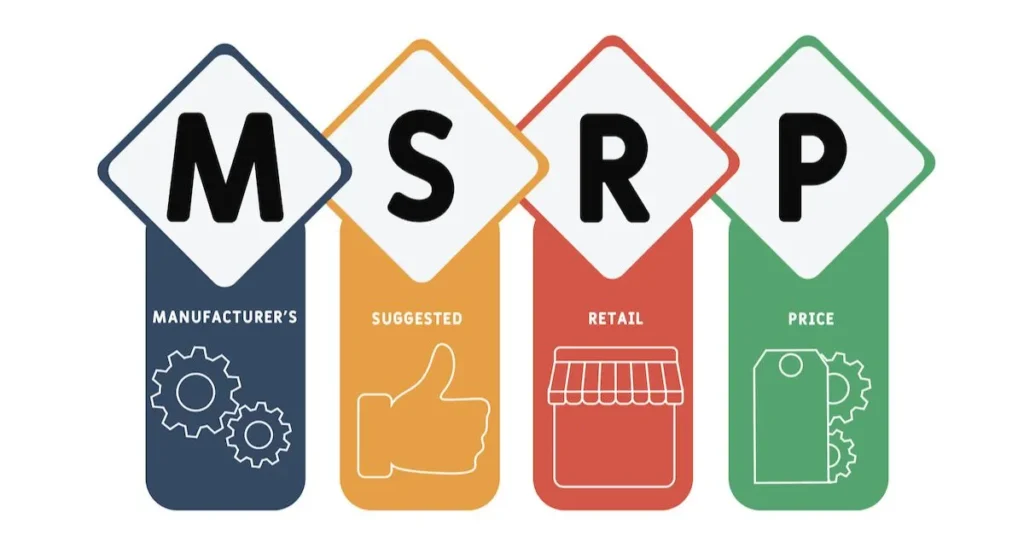
Buying a new car, the latest smartphone, or even a gaming console, you’ve probably noticed the term MSRP listed on price tags or advertisements.
But what exactly does MSRP mean, and why should you care?
stands for Manufacturer’s Suggested Retail Price, which is the price a manufacturer recommends retailers charge for a product.
It’s a helpful benchmark that guides both buyers and sellers, giving a clear starting point for pricing.
However, MSRP doesn’t always reflect what you’ll actually pay products can sell above, below, or exactly at this suggested price depending on demand, promotions, and retailer strategies.
Understanding MSRP can help you make smarter purchasing decisions, negotiate better deals, and avoid overpaying.
In this guide, we’ll dive deep into what MSRP really is, how it’s calculated, how it differs from the actual price, and how you can use it to your advantage when buying cars, electronics, and more.
What Does MSRP Stand For?
MSRP stands for Manufacturer’s Suggested Retail Price, sometimes also called the sticker price in industries like automotive. Simply put, it is the price that the manufacturer recommends a retailer charge for a product. The idea behind MSRP is to provide a standardized guideline for pricing, ensuring consistency across stores and regions. For example, if a car manufacturer sets an MSRP of $30,000 for a vehicle, that is the suggested starting point for dealerships, though the final sale price may vary depending on demand, dealer incentives, or local market conditions.
MSRP is used across many industries, not just automobiles. Electronics, appliances, video games, and even luxury goods often carry an MSRP to help both retailers and consumers understand the “official” price point of a product. This recommended price helps maintain brand value, prevents extreme price undercutting, and gives buyers a reference point to judge whether a deal is fair.
It’s important to note that MSRP is just a suggestion, not a mandatory rule. Retailers are free to sell above, below, or at MSRP based on market conditions, promotions, or stock levels. Understanding what MSRP represents is the first step to making informed buying decisions, as it sets the stage for recognizing deals, negotiating prices, and avoiding overpaying for products in any industry.
How Is MSRP Determined?
The Manufacturer’s Suggested Retail Price (MSRP) isn’t chosen randomly; it’s calculated carefully by manufacturers to balance costs, competition, and market appeal. One of the primary factors is production cost. This includes raw materials, labor, and manufacturing expenses. A product’s MSRP must cover these costs while still leaving room for the manufacturer and retailer to earn a profit.
Another important factor is research and development (R&D). Innovative products often have higher R&D costs, which are reflected in the MSRP. For example, a high-tech smartphone with advanced features will usually have a higher MSRP than a basic model because the manufacturer needs to recoup development expenses.
Market competition also plays a significant role. Manufacturers often research similar products from competitors to ensure their MSRP is competitive while still highlighting the product’s unique value. This is particularly common in the automotive and electronics industries, where similar models from different brands often compete closely in price.
Brand positioning is another factor. Luxury brands may set a higher MSRP to maintain an exclusive image, while mass-market brands keep prices lower to attract a broader audience. Seasonal trends, promotions, and regional differences can also influence MSRP.
Ultimately, it’s important to understand that MSRP is just a recommended price. Retailers have the flexibility to sell above or below MSRP depending on demand, inventory, and other market factors. Knowing how MSRP is determined helps consumers gauge whether they’re paying a fair price and identify potential deals.
MSRP vs Actual Price
While MSRP provides a recommended price, the actual price you pay for a product can vary significantly. This is because MSRP is just a guideline; retailers and dealers have the flexibility to adjust prices based on supply, demand, and business strategy. Understanding the difference between MSRP and actual price can help you make smarter purchasing decisions.
For cars, MSRP is often referred to as the sticker price on the window. However, dealers may sell above MSRP for high-demand models or limited editions, especially when inventory is low. Conversely, cars can also sell below MSRP during promotions, end-of-year sales, or when a dealer wants to move inventory quickly. Comparing the invoice price what the dealer actually paid for the car with MSRP can help buyers negotiate better deals.
In electronics, such as smartphones, laptops, or gaming consoles, MSRP serves as a baseline. Retailers may sell products below MSRP during sales events like Black Friday or offer bundles to entice buyers. Sometimes, high-demand items sell above MSRP in secondary markets, as seen with limited-edition devices or new game consoles.
Even in appliances and luxury goods, the actual selling price can differ from MSRP. Seasonal discounts, shipping costs, and local taxes also affect the final price. By knowing the MSRP, consumers can recognize whether a deal is fair or overpriced.
In short, MSRP is a reference point, not a fixed rule. Comparing MSRP with actual market prices, promotions, and discounts empowers buyers to save money and make informed choices across industries.
Pros and Cons of MSRP
The Manufacturer’s Suggested Retail Price (MSRP) offers both advantages and disadvantages for consumers and retailers alike. Understanding these can help you use MSRP more effectively when making purchasing decisions.
Pros of MSRP:
- Price Transparency: MSRP provides a clear starting point for buyers, helping them understand what a product “should” cost. This reduces confusion and gives consumers confidence when comparing prices across stores or online.
- Consistent Pricing: For retailers, MSRP helps maintain pricing consistency. By following the suggested price, brands protect their value and avoid extreme undercutting, which could harm the product’s perceived quality.
- Reference for Discounts: Consumers can use MSRP as a benchmark to evaluate deals, sales, or promotions. Knowing the suggested price helps you recognize genuine discounts versus minor markdowns.
Cons of MSRP:
- Doesn’t Reflect Market Reality: MSRP is a guideline, not a guarantee. Products can sell above or below this price depending on demand, availability, or regional differences.
- Can Mislead Buyers: Some first-time buyers may assume MSRP is the “final price” and overpay without researching actual market rates.
- Limited Negotiation Insight: MSRP alone doesn’t reveal the retailer’s costs, inventory pressure, or incentives, which can affect the final price you could negotiate.
In summary, MSRP is a useful tool but not an absolute rule. Consumers who understand both the benefits and limitations of MSRP can make smarter purchasing decisions, avoid overpaying, and leverage this knowledge to find the best deals in cars, electronics, and other products.
Common Misconceptions About MSRP
Many consumers see MSRP on products and assume it represents a fixed or final price, but there are several common misconceptions that can lead to confusion or overpaying. Understanding these misconceptions is key to using MSRP effectively.
1. MSRP is the Final Price:
A widespread belief is that MSRP is the price you must pay. In reality, it’s just a suggested retail price. Retailers can sell products above or below MSRP depending on demand, inventory, or promotions. For example, a limited-edition car might sell above MSRP, while an older model might be discounted below it.
2. MSRP Equals Product Quality:
Some buyers assume a higher MSRP indicates superior quality. While price can reflect features or brand prestige, it does not automatically mean the product is better than a lower-priced alternative. MSRP is primarily a pricing guideline, not a quality guarantee.
3. MSRP Prevents Negotiation:
Another misconception is that MSRP limits price flexibility. In many industries, especially automotive and electronics, negotiation is common. Knowing the MSRP gives buyers a benchmark to bargain for discounts or added incentives.
4. MSRP is Universal Across All Retailers:
MSRP can vary slightly depending on region, taxes, or shipping costs. Not every retailer follows the same pricing exactly, so comparing prices is always important.
By clearing up these misconceptions, consumers can make smarter decisions, avoid overpaying, and use MSRP as a tool to evaluate deals rather than as a strict rule.
How Consumers Can Use MSRP to Their Advantage
Understanding MSRP is more than just knowing a product’s suggested price it can be a powerful tool for saving money and making informed purchasing decisions. Here’s how consumers can leverage MSRP effectively.
1. Compare MSRP with Actual Prices:
Before making a purchase, check the MSRP against the price offered by different retailers. This helps identify whether a deal is genuinely good or just a small discount that may not be worthwhile. For example, if a car has an MSRP of $30,000 but a dealer offers it for $28,000, you know you’re getting a tangible saving.
2. Use MSRP for Negotiation:
MSRP provides a reference point for negotiations. Whether buying a vehicle, electronics, or appliances, knowing the MSRP gives you leverage to discuss discounts, trade-in values, or added incentives. Dealers often expect buyers to negotiate, and referencing MSRP shows you’re informed.
3. Spot Seasonal and Promotional Deals:
Retailers frequently sell products below MSRP during sales events like Black Friday, end-of-year clearances, or back-to-school promotions. Tracking MSRP over time helps you recognize when a sale is genuinely worthwhile.
4. Evaluate Resale Value:
Products with a well-known MSRP, such as cars or collectibles, allow you to gauge resale value. Knowing the original suggested price helps you determine fair offers when buying second-hand or selling items yourself.
By using MSRP strategically, consumers can avoid overpaying, find better deals, and negotiate confidently. Treating MSRP as a guideline rather than a fixed rule empowers smarter shopping across industries.
FAQs About MSRP
1. What does MSRP stand for?
MSRP stands for Manufacturer’s Suggested Retail Price. It is the price a manufacturer recommends a retailer charge for a product, serving as a standard benchmark for both sellers and buyers.
2. Is MSRP the final price I pay?
No. MSRP is only a suggested price. The actual price can be higher or lower depending on demand, promotions, inventory, or negotiation. Consumers should compare MSRP with market prices to ensure they’re getting a fair deal.
3. How is MSRP determined?
Manufacturers calculate MSRP by considering production costs, research and development, marketing, competition, and brand positioning. It reflects a price that covers costs while remaining competitive in the market.
4. Why do some products sell above MSRP?
Products can sell above MSRP when demand exceeds supply, such as limited-edition items or high-demand electronics. Dealers or retailers may charge a premium to capitalize on scarcity.
5. Can MSRP affect resale value?
Yes. Knowing the original MSRP of a product, especially cars or collectibles, helps buyers and sellers gauge fair resale value. It serves as a reference point for pricing second-hand items.
6. Does MSRP apply to all products?
MSRP is most commonly used in cars, electronics, appliances, and luxury goods, but not all products carry an MSRP. For many everyday items, pricing is determined entirely by the retailer.
7. How can I use MSRP to get the best deal?
Compare the MSRP with actual prices, check promotions, and use it as a negotiation tool. Being informed about MSRP allows you to identify discounts, negotiate effectively, and avoid overpaying.
Conclusion
Understanding MSRP, or Manufacturer’s Suggested Retail Price, is essential for any savvy consumer.
While it represents a recommended price from the manufacturer, it is not the final price you must pay.
Products can sell above, below, or exactly at MSRP depending on market conditions, retailer strategies, and demand.
Recognizing the difference between MSRP and actual price empowers buyers to make smarter purchasing decisions, whether they’re shopping for cars, electronics, appliances, or luxury items.
MSRP serves multiple purposes. For manufacturers and retailers, it standardizes pricing, protects brand value, and provides a clear reference point for promotions and sales.
For consumers, it acts as a benchmark to evaluate deals, negotiate prices, and determine resale value.
Being aware of common misconceptions like assuming MSRP equals quality or final price ensures buyers don’t overpay or miss out on genuine discounts.
To make the most of MSRP, always compare it with actual prices, look for seasonal or promotional discounts, and use it as a negotiation tool.
By treating MSRP as a guideline rather than a strict rule, you gain the advantage in any purchase.
Ultimately, a strong understanding of MSRP can save money, reduce confusion, and make shopping a more informed and confident experience.

Swaan was born in Cambridge, the eldest of three children of pathologist Meredith Blake Robson Swaan and his wife, Marjorie Dykes.
Swaan was educated at King’s College School, Cambridge, and then at Winchester College, a boarding independent school for boys in the city of Winchester in Hampshire, where he was an exhibitioner. He then studied zoology at Gonville and Caius College, Cambridge, where he graduated MA and PhD.