In today’s fast-paced digital world, abbreviations and acronyms are everywhere, popping up in texts, social media posts, emails, and professional documents. One such acronym that often leaves people scratching their heads is SMT.
Depending on where you encounter it, SMT can have entirely different meanings from casual slang in messaging apps to technical terms in electronics and computing.
This versatility can make understanding SMT confusing, especially if you’re unfamiliar with the context.
In this article, we’ll break down all the possible meanings of SMT, explore how it’s used in texting, social media, technology, and professional fields, and provide clear examples to help you recognize the correct interpretation in any situation.
Whether you’re a student, a tech enthusiast, or just curious about modern abbreviations, by the end of this guide, you’ll confidently know what SMT means and how to use or interpret it appropriately.
SMT in Texting and Social Media
In the world of texting and social media, abbreviations like SMT are used to save time and convey messages quickly. One of the most common meanings of SMT in this context is “Send Me Text”. People often use it when they want someone to message them, whether it’s to continue a conversation, share information, or simply stay in touch. For example, a friend might text: “Hey, SMT when you get a chance,” which clearly signals that they want you to reach out via text.
However, SMT can also mean “So Much Trouble” in casual conversations, especially among younger users on platforms like Twitter, Snapchat, or Discord. For instance, someone might write, “This homework is SMT,” to express frustration. The exact meaning usually depends on the context, the platform, and the relationship between the people communicating.
It’s also worth noting that abbreviations like SMT can vary regionally or even between friend groups. Social media and texting are fast-paced environments, so acronyms evolve rapidly. To correctly interpret SMT, always consider the surrounding words, the tone of the conversation, and the platform being used. Misreading it can lead to confusion or miscommunication, but once you get familiar with these patterns, understanding SMT in texting and social media becomes second nature.
SMT in Technology and Electronics
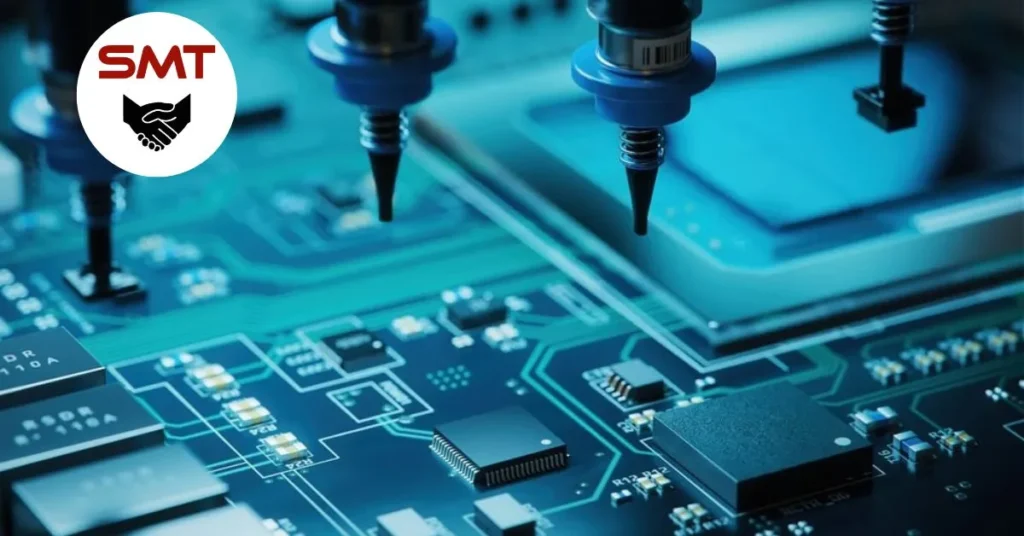
Outside of texting and social media, SMT is widely recognized in the field of electronics as “Surface-Mount Technology.” This term refers to a method of constructing electronic circuits in which components are mounted directly onto the surface of printed circuit boards (PCBs), rather than using traditional through-hole methods. SMT revolutionized electronics manufacturing by enabling smaller, lighter, and more efficient devices.
Surface-mount components come in a variety of shapes and sizes, ranging from tiny resistors and capacitors to complex integrated circuits. The process allows manufacturers to place components on both sides of a PCB, increasing circuit density and performance. Devices like smartphones, laptops, digital cameras, and even household appliances rely heavily on SMT for their compact and high-functioning designs.
The advantages of SMT include faster production times, reduced assembly costs, and improved reliability. Since components are soldered directly onto the board, connections are often more secure and less prone to damage from vibration or wear. Additionally, SMT enables miniaturization, which is essential in today’s portable and wearable technology.
Understanding SMT in electronics is crucial for engineers, technicians, and anyone working with modern electronic devices. By recognizing that SMT refers to this specific manufacturing technique, you can avoid confusing it with slang or other meanings in casual conversation.
SMT in Computing and Professional Fields
Beyond texting and electronics, SMT also has important meanings in computing and professional environments. One of the most common technical interpretations is “Synchronous Multi-Threading.” This concept is used in computer processors to improve performance by allowing multiple threads or sequences of instructions to be executed simultaneously within a single CPU core. Essentially, SMT enables more efficient use of processing resources, which can speed up complex calculations and multitasking. Modern CPUs from companies like Intel and AMD often incorporate SMT to enhance performance in both consumer and enterprise systems.
In professional or academic settings, SMT can also stand for “Science, Math, Technology,” often used as an abbreviation in educational programs, research projects, or organizational contexts. For example, a school might offer an SMT-focused curriculum to highlight STEM-related subjects, emphasizing analytical thinking, problem-solving, and technological literacy.
Understanding the context is key. In a discussion about computer hardware, SMT almost always refers to Synchronous Multi-Threading. In academic or institutional documents, it may indicate Science, Math, Technology initiatives. Confusing these meanings can lead to misunderstandings, particularly in professional emails, reports, or technical discussions.
By recognizing SMT’s professional uses, you gain insight into both computing performance optimization and academic or organizational terminology. This knowledge ensures that whether you are reading a tech article, attending a lecture, or reviewing company materials, you can accurately interpret the acronym and respond appropriately.
Other Less Common or Niche Meanings
While SMT is most often associated with texting, electronics, or computing, it can also appear in less common or highly specialized contexts. These niche meanings often depend on the industry, subculture, or academic field, which makes understanding context even more important.
For instance, in some professional or organizational settings, SMT may stand for “Standard Maintenance Time” or “System Management Team.” In manufacturing or engineering companies, Standard Maintenance Time refers to the expected duration required to perform specific maintenance tasks, helping teams schedule and optimize workflow efficiently. System Management Team, on the other hand, might appear in IT or corporate environments, indicating a group responsible for overseeing system operations, maintenance, and troubleshooting.
In certain academic or research contexts, SMT may represent a specialized program or initiative, such as “Sociology, Media, and Technology”, which combines social sciences with technical studies. Similarly, in finance or business reports, SMT could occasionally appear as an internal abbreviation unique to a company or department.
The key takeaway is that SMT can have dozens of meanings outside its popular uses. To avoid confusion, always examine the surrounding text and consider the industry or group using the abbreviation. When in doubt, asking for clarification is better than assuming. Keeping a mental note of niche SMT meanings can be especially helpful for professionals, researchers, or students who frequently encounter diverse documents or communications.
By being aware of these less common uses, readers can confidently navigate situations where SMT appears unexpectedly and accurately interpret its intended meaning.
How to Determine the Correct Meaning of SMT
Given that SMT can have multiple interpretations ranging from texting slang to technical terms understanding the correct meaning in any situation requires careful attention to context. One of the first steps is to consider the environment where SMT is used. For example, if you encounter it in a casual chat or social media post, it’s likely slang such as “Send Me Text” or “So Much Trouble.” On the other hand, if it appears in a technical document or electronics manual, it probably refers to Surface-Mount Technology.
Another helpful approach is to look at surrounding keywords and phrases. Text about smartphones, laptops, or PCBs often signals the electronics meaning. In contrast, mentions of threads, CPUs, or multitasking indicate Synchronous Multi-Threading in computing. Context clues like these make it easier to narrow down the intended definition.
When uncertainty persists, use reliable online resources such as acronym dictionaries, technical glossaries, or trusted forums. Searching for “SMT meaning in [context]” can quickly clarify the correct interpretation.
Finally, don’t hesitate to ask the sender or source directly if the meaning remains unclear. Misinterpreting SMT could lead to confusion in both casual and professional communication, so verification is often worthwhile.
By combining context analysis, keyword recognition, and reliable references, you can confidently determine the correct meaning of SMT, ensuring clear understanding whether you are texting friends, reading technical material, or participating in professional discussions.
Common Mistakes and Misinterpretations of SMT
Because SMT has multiple meanings across different contexts, it’s easy to misinterpret, especially if readers or communicators aren’t paying close attention. One of the most frequent mistakes is assuming SMT always means texting slang like “Send Me Text.” For instance, receiving SMT in a workplace email or technical document could be misread, leading to confusion or even embarrassment. Misreading it in electronics or computing contexts where SMT refers to Surface-Mount Technology or Synchronous Multi-Threading can result in misunderstandings about technical instructions or project requirements.
Another common error is confusing SMT with similar abbreviations, such as SMH (“Shaking My Head”) or SMS (“Short Message Service”). In casual chats, mixing up SMT and SMH could completely change the tone of the message, while confusing SMT and SMS might lead to miscommunication about texting or communication needs.
Regional or group-specific variations also contribute to misinterpretation. In some social media circles, SMT may have unique slang meanings unknown to outsiders. Without context, interpreting SMT incorrectly can lead to awkward exchanges, missed deadlines, or incorrect technical decisions.
To avoid these mistakes, always consider the context, audience, and platform. When in doubt, use online acronym databases, ask clarifying questions, or double-check industry-specific documentation. Being cautious with SMT ensures accurate understanding and helps maintain professionalism in both casual and technical communications.
Frequently Asked Questions
Because SMT has multiple meanings, readers often have questions about its usage. Here are some of the most common queries:
1. What does SMT mean in texting?
In texting and social media, SMT commonly stands for “Send Me Text” or occasionally “So Much Trouble.” The meaning depends on context, the platform, and the tone of the conversation. Checking surrounding words or asking the sender can clarify the intended meaning.
2. What is SMT in electronics?
In electronics, SMT refers to Surface-Mount Technology, a method of mounting components directly on a printed circuit board (PCB). It allows for smaller, more efficient devices like smartphones, laptops, and other modern electronics.
3. Can SMT mean different things in computing?
Yes. In computing, SMT often stands for Synchronous Multi-Threading, a technique that enables a CPU to execute multiple threads simultaneously, improving efficiency and performance.
4. Is SMT always slang?
No. While SMT is used as slang in texting, it also has formal meanings in electronics, computing, and professional or academic contexts. Misinterpreting it as slang in technical materials can cause confusion.
5. How do I know which meaning of SMT applies?
The key is context. Look at the platform, surrounding words, and the audience. If it’s unclear, consult reliable sources or ask the sender for clarification.
By understanding these frequently asked questions, readers can confidently navigate SMT in a variety of settings whether casual, technical, or professional without misunderstanding its intended meaning.
Conclusion
SMT is a versatile acronym that can take on very different meanings depending on context, ranging from casual texting slang to technical terms in electronics and computing.
In everyday conversations or on social media, SMT is most commonly used as “Send Me Text” or “So Much Trouble,” helping people communicate quickly and efficiently.
Recognizing these slang meanings is useful for understanding messages, posts, or online discussions.
In the world of technology, SMT usually stands for Surface-Mount Technology, a method of constructing electronic circuits that has revolutionized manufacturing.
Understanding SMT in this context is essential for electronics enthusiasts, engineers, and technicians, as it explains how modern devices achieve their compact and efficient designs.
Similarly, in computing and professional settings, SMT can mean Synchronous Multi-Threading or represent academic programs like Science, Math, Technology, highlighting its importance in performance optimization and education.
Because SMT has so many possible interpretations, context is key.
Paying attention to the platform, surrounding words, and the audience ensures that you understand the intended meaning and communicate accurately.
When in doubt, consulting reliable sources or asking for clarification is the best approach.
By being aware of SMT’s multiple meanings from texting slang to technical applications you can confidently interpret it in any situation.
This knowledge not only helps avoid confusion but also empowers you to participate in conversations, professional discussions, and technical contexts with clarity and confidence.

Swaan was born in Cambridge, the eldest of three children of pathologist Meredith Blake Robson Swaan and his wife, Marjorie Dykes.
Swaan was educated at King’s College School, Cambridge, and then at Winchester College, a boarding independent school for boys in the city of Winchester in Hampshire, where he was an exhibitioner. He then studied zoology at Gonville and Caius College, Cambridge, where he graduated MA and PhD.