Strep throat is a common bacterial infection that affects the throat and tonsils, causing discomfort and sometimes serious complications if left untreated.
Knowing what strep looks like can help you identify it early, get proper treatment, and prevent it from spreading to others. Unlike a typical viral sore throat, strep often presents with distinct visual signs, such as red, inflamed tonsils, white or yellow patches, and tiny red spots on the roof of the mouth.
These clues, combined with symptoms like fever, pain while swallowing, and swollen lymph nodes, can indicate a strep infection.
Recognizing these signs is especially important for parents, caregivers, and anyone frequently in close contact with children, as they are more prone to this infection.
In this guide, we’ll explore strep throat symptoms, visual indicators, diagnosis, treatment options, and prevention tips, giving you a complete understanding of how to spot and manage strep effectively.
Understanding Strep Throat
Strep throat is a bacterial infection caused by Group A Streptococcus bacteria. Unlike viral sore throats, which often resolve on their own, strep requires prompt medical attention and, in most cases, antibiotics to prevent complications. The bacteria infect the throat and tonsils, leading to inflammation, pain, and sometimes fever. Strep is highly contagious and spreads easily through droplets from coughing, sneezing, or close contact, making schools, daycare centers, and households common hotspots for transmission.
Children between the ages of 5 and 15 are most commonly affected, but adults can also contract the infection, particularly in crowded or close-contact environments. Seasonal patterns are observed, with strep cases peaking in late fall, winter, and early spring. People with weakened immune systems or frequent exposure to infected individuals are at higher risk.
One key point is distinguishing strep throat from a viral sore throat, which is far more common. Viral infections often come with a runny nose, cough, or mild throat irritation and usually do not produce the white or yellow patches associated with strep. Strep tends to cause sudden, severe throat pain, difficulty swallowing, and red, inflamed tonsils, sometimes accompanied by tiny red dots on the roof of the mouth (petechiae). Recognizing these differences early can ensure timely treatment and reduce the risk of complications such as rheumatic fever or kidney inflammation.
Understanding what strep throat is and how it spreads is the first step toward identifying, treating, and preventing this common infection.
Symptoms of Strep Throat & Visual Signs
Recognizing strep throat early is crucial, and many signs are visible in the throat, making it easier to differentiate from a viral sore throat. The most common symptom is a sudden, severe sore throat, often accompanied by pain when swallowing. Patients may also experience fever, chills, headache, nausea, or body aches, signaling that the body is fighting a bacterial infection. Swollen, tender lymph nodes in the neck are another key indicator of strep.
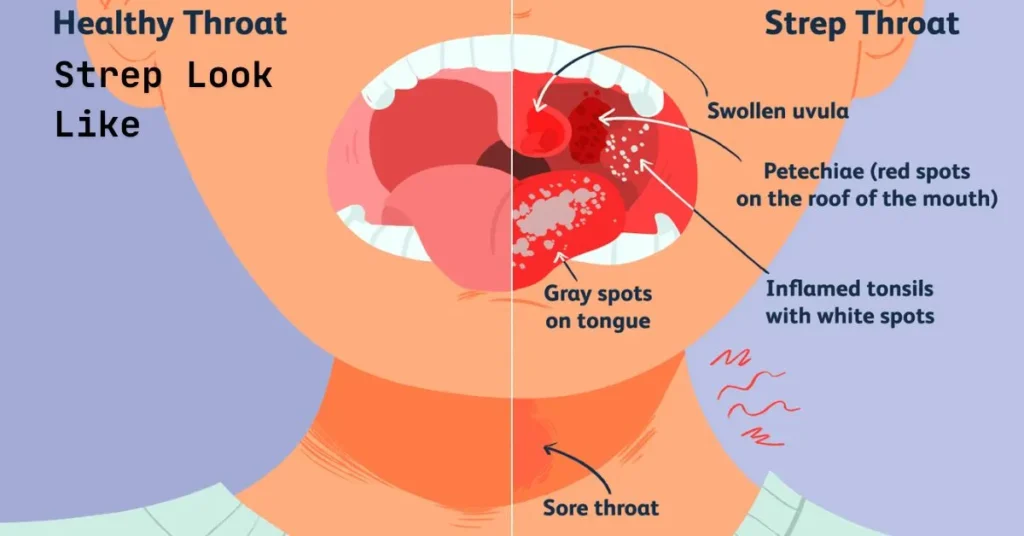
Visually, strep throat has several distinct features. The tonsils often appear red and inflamed, sometimes with white or yellow patches or streaks of pus. The uvula, the small tissue at the back of the throat, may be swollen and bright red. Tiny red spots, called petechiae, can also appear on the roof of the mouth and are a classic sign of strep infection. These visual cues, combined with the other symptoms, help doctors and caregivers identify strep quickly.
It’s important to note the differences between strep and viral sore throats. Viral infections usually present with a mild sore throat, runny nose, or cough, and rarely produce white patches or petechiae. In contrast, strep symptoms develop rapidly, often within 24–48 hours, and are more intense.
By paying attention to both symptoms and visual signs, you can spot strep throat early, seek proper medical care, and reduce the risk of complications or spreading the infection to others. Early recognition is especially important for children and high-risk adults, who are more susceptible to serious outcomes.
Complications if Strep Throat Is Left Untreated
While strep throat is common and usually treatable, leaving it untreated can lead to serious health complications. One of the most well-known risks is rheumatic fever, an inflammatory disease that can damage the heart, joints, and nervous system. Rheumatic fever develops when the immune system reacts to the streptococcal bacteria, causing widespread inflammation. This is why prompt antibiotic treatment is essential to prevent long-term heart issues.
Another potential complication is post-streptococcal glomerulonephritis, a type of kidney inflammation. This condition can lead to swelling, high blood pressure, and changes in urine output. Although rare, it underscores the importance of addressing strep infections quickly.
Untreated strep can also cause peritonsillar abscesses, which are pockets of pus near the tonsils. These abscesses are painful, can obstruct the throat, and sometimes require surgical drainage. Additionally, persistent strep infections can lead to chronic or recurrent throat infections, making individuals more prone to repeated bouts of pain, fever, and discomfort.
Beyond individual health risks, untreated strep throat can spread easily to family members, classmates, and coworkers, increasing the risk of outbreaks in schools, daycare centers, and workplaces. Early detection, proper medical treatment, and completing the full course of antibiotics are key steps to avoid these complications.
Understanding the possible consequences of untreated strep emphasizes the importance of recognizing symptoms, seeking timely medical attention, and following recommended care. Awareness and prompt action can prevent minor infections from turning into serious health problems.
Diagnosing Strep Throat
Proper diagnosis is crucial when it comes to strep throat, as symptoms can resemble viral sore throats. While noticing red, inflamed tonsils, white patches, and petechiae can suggest strep, only a medical professional can confirm it. If you or your child experience sudden throat pain, fever, swollen lymph nodes, and difficulty swallowing, it’s important to seek medical attention promptly.
Doctors typically use two main diagnostic methods. The rapid antigen detection test (RADT) is commonly performed in clinics and can provide results within minutes. A positive RADT usually confirms a strep infection, allowing immediate treatment. However, because rapid tests are not 100% accurate, a throat culture may also be recommended. This involves swabbing the back of the throat and tonsils and sending it to a lab. While results take 24–48 hours, throat cultures are more accurate and can confirm negative or uncertain cases.
It’s also important to differentiate strep from viral throat infections. Viral sore throats often develop gradually and are accompanied by cough, runny nose, or mild congestion, whereas strep symptoms appear suddenly and are more intense. Recognizing the difference helps avoid unnecessary antibiotic use, which is ineffective against viruses.
In some cases, physicians may rely on symptom checklists, such as the Centor or McIsaac criteria, to determine the likelihood of strep before testing. Timely and accurate diagnosis ensures proper treatment, prevents complications like rheumatic fever, and reduces the spread of infection to others.
Treatment Options for Strep Throat
Once strep throat is diagnosed, proper treatment is essential to relieve symptoms, prevent complications, and stop the infection from spreading. The most effective treatment is antibiotics, usually penicillin or amoxicillin, which target the Group A Streptococcus bacteria. Completing the full course of antibiotics is critical, even if symptoms improve within a few days. Stopping treatment early can allow the infection to persist or return, increasing the risk of rheumatic fever or kidney problems.
In addition to antibiotics, managing symptoms is important for comfort and recovery. Over-the-counter pain relievers such as acetaminophen or ibuprofen can reduce throat pain and fever. Drinking warm liquids, like tea or broth, and consuming soft foods can help soothe the throat. Gargling with warm saltwater several times a day is a simple, effective remedy that reduces swelling and discomfort.
Rest and hydration are equally important. Strep weakens the body’s immune system, so adequate sleep and plenty of fluids aid recovery. Patients should also avoid irritants like smoke or dry air, which can worsen throat inflammation.
For children and adults alike, early treatment not only speeds recovery but also reduces the chance of spreading strep to family, friends, or classmates.
Prevention of Strep Throat
Preventing strep throat is easier than treating complications, and simple hygiene and lifestyle measures can significantly reduce the risk of infection. Since strep bacteria spread through droplets from coughing, sneezing, or close contact, one of the most effective ways to prevent it is frequent handwashing. Washing hands with soap and warm water for at least 20 seconds, especially after coughing, sneezing, or touching shared surfaces, can remove harmful bacteria before they spread.
Avoiding shared utensils, cups, or towels is another important preventive measure. Strep can survive on objects briefly, so minimizing contact with items used by infected individuals helps reduce transmission. Teaching children to cover their mouths when coughing or sneezing and to use tissues or the crook of their elbow also limits the spread of bacteria.
Lifestyle measures can also help maintain a strong immune system, making the body more resistant to infections. Eating a balanced diet, getting adequate sleep, and managing stress all support overall immunity. Regularly cleaning commonly touched surfaces, like doorknobs, keyboards, and toys, further reduces the risk of strep spreading in homes, schools, or daycare centers.
For families or individuals exposed to strep, it’s crucial to monitor for early symptoms. Prompt attention at the first signs of sore throat, fever, or visual indicators such as red tonsils or white patches can prevent more serious complications.
When to Follow Up & Monitor Recovery
Even after completing treatment for strep throat, it’s important to monitor recovery and know when to seek further medical attention.
One key sign to watch for is persistent sore throat or fever after 48 hours of antibiotic treatment. Additionally, difficulty swallowing, breathing problems, or worsening throat pain should prompt immediate medical evaluation.
Some people may experience post-treatment complications, such as rheumatic fever or kidney inflammation, which can develop even after the strep infection seems to have resolved. Early warning signs include joint pain, unusual swelling, rash, or changes in urine output. For children, parents should monitor for behavioral changes, fatigue, or repeated infections, which may signal the need for a follow-up visit.
By staying attentive during the recovery phase, recognizing warning signs, and consulting a doctor when necessary, patients can fully recover from strep throat and avoid long-term health issues or recurrence.
Visual Guide: What Strep Throat Looks Like
One of the most helpful ways to identify strep throat is by recognizing its distinct visual signs in the throat and tonsils. Unlike viral sore throats, strep infections often present with bright red, inflamed tonsils that may appear swollen and tender.
Another common visual sign is tiny red spots on the roof of the mouth, known as petechiae. These small dots can help differentiate strep from other types of throat infections. The uvula, the small tissue hanging at the back of the throat, may also appear swollen and bright red. In severe cases, the entire back of the throat may look irritated and inflamed.
It’s important to note that not every case of strep will have all these visual features. Some patients, especially adults, may have a milder appearance, while children often show more pronounced signs. Comparing strep to viral sore throats, viral infections usually cause a pink throat without white patches, often accompanied by a cough or runny nose symptoms less common in strep.
While images can be graphic, seeing these visual cues red, inflamed tonsils, white patches, petechiae, and a swollen uvula can alert parents, caregivers, or patients to the presence of strep. Recognizing these signs early ensures timely medical care and treatment, reducing the risk of complications.
Conclusion:
Strep throat is a common yet potentially serious bacterial infection that requires prompt attention. Recognizing what strep looks like including red, inflamed tonsils, white or yellow patches, swollen uvula, and tiny red dots on the roof of the mouth can help patients, parents, and caregivers identify the infection early.
Early recognition, combined with awareness of other symptoms such as sudden sore throat, fever, and swollen lymph nodes, ensures timely treatment and reduces the risk of complications.
Proper diagnosis is essential, as symptoms of strep can resemble viral sore throats. Medical professionals use rapid strep tests and throat cultures to confirm infection, allowing appropriate treatment with antibiotics like penicillin or amoxicillin.
Completing the full course of antibiotics not only speeds recovery but also prevents serious complications such as rheumatic fever, kidney inflammation, and peritonsillar abscesses. Alongside medication, home care measures including rest, hydration, warm saltwater gargles, and pain relief support recovery and comfort.
Preventing strep throat is equally important. Good hand hygiene, avoiding shared utensils, covering coughs and sneezes, and cleaning frequently touched surfaces can significantly reduce the spread of bacteria.
By understanding the visual signs, symptoms, treatment options, and preventive measures, readers can confidently recognize and manage strep throat. Timely action not only speeds recovery but also protects the health of families, schools, and communities.
Awareness and care are the keys to staying healthy and preventing the spread of this contagious infection.

Nikki Jorton is a Norwegian-born transgender woman and content creator who became publicly known through her relationship and marriage to American comedian and radio personality Jim Norton. The two met online and developed a long-distance relationship that faced significant immigration and legal challenges before Nikki was able to move to the United States. Their journey, marked by persistence and openness, attracted media attention for its honesty and unconventional nature. The couple married in October 2023 and now live together in New York City.